Fushimi Inari-taisha
Videos
Fushimi Inari-taisha is the head shrine of the kami Inari, located in Fushimi-ku, Kyoto, Japan. The shrine sits at the base of a mountain, also named Inari, which is 233 metres above sea level, and in

Torii path with a hanging lantern at Fushimi Inari-Taisha Shrine

Front view of the haiden

View of the south-western wing of Senbon Torii path.

View of the north-eastern wing of Senbon Torii path.
Inari Ōkami
Videos
Inari Ōkami, also called Ō-Inari, is the Japanese kami of foxes, fertility, rice, tea, sake, agriculture and industry, and general prosperity and worldly success, and is one of the principal kami of S
Fushimi Inari-taisha
…Fushimi Inari-taisha (Japanese: 伏見稲荷大社) is the head shrine of the kami Inari, located in Fushimi-ku, Kyoto, Japan. The shrine sits at the base of a mountain, also named Inari, which is 233 metres (764 ft) above sea level, and…
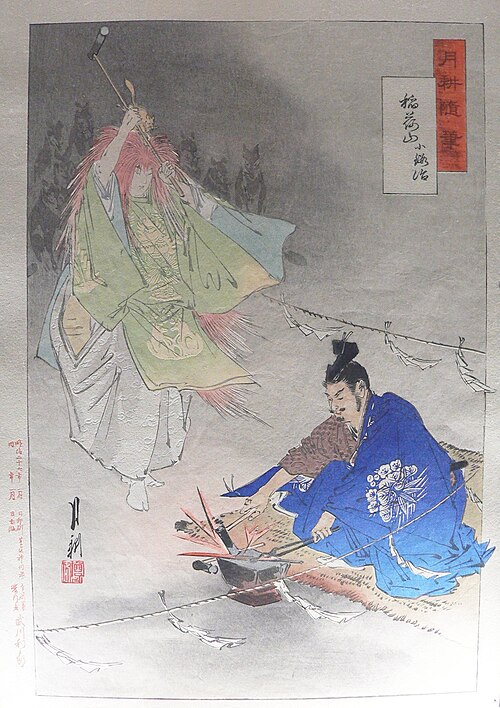
Inari and their fox spirits help the blacksmith Munechika forge the blade kogitsune-maru (Little Fox) in the late 10th century. This legend is the subject of the noh drama Sanjo Kokaji.
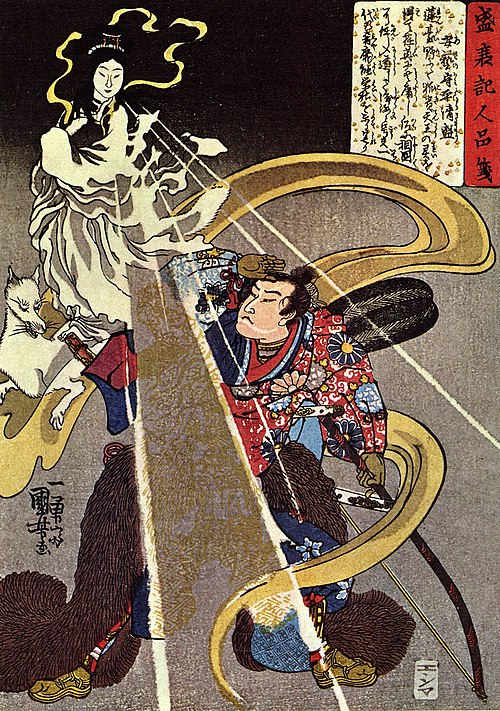
Inari appears to a warrior. This portrayal of Inari shows the influence of Dakiniten concepts from Buddhism.

The Hokkaido red fox
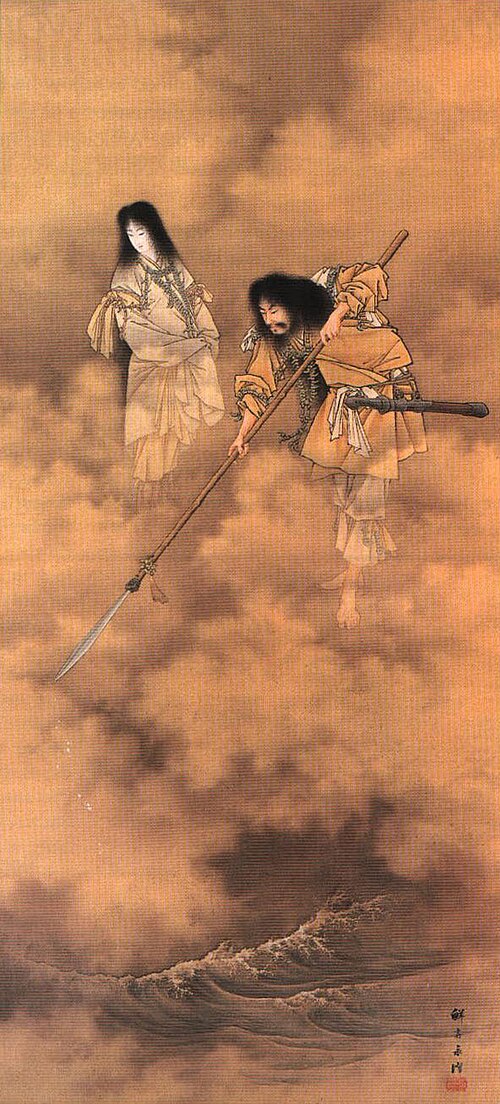
Searching the Seas with the Tenkei (天瓊を以て滄海を探るの図, Tenkei o motte sōkai o saguru no zu). Painting by Kobayashi Eitaku, 1880–1890 (MFA, Boston). Izanagi to the right, Izanami to the left.