Galileo (spacecraft)
Videos
Galileo was an American robotic space probe that studied the planet Jupiter and its moons, as well as the asteroids Gaspra and Ida. Named after the Italian astronomer Galileo Galilei, it consisted of

Artist's concept of Galileo at Io with Jupiter in the background. In reality, the high-gain foldable antenna failed to deploy in flight.

Diagram of the atmospheric entry probe's instruments and subsystems

In the Vertical Processing Facility (VPF), Galileo is prepared for mating with the Inertial Upper Stage booster.

Launch of Space Shuttle Atlantis on STS-34, carrying Galileo into Earth orbit
Hughes Aircraft Company
Videos
Hughes Aircraft Company was a major American aerospace and defense contractor founded on February 14, 1934 by Howard Hughes in Glendale, California, as a division of Hughes Tool Company. The company p
Galileo (spacecraft)
…West Germany's Messerschmitt-Bölkow-Blohm supplied the propulsion module. NASA's Ames Research Center managed the atmospheric probe, which was built by Hughes Aircraft Company. At launch, the orbiter and probe together had a mass of 2,562 kg (5,648 lb) and stood 6.15 m (20.2 ft) tall. Spacecraft are normally stabilized either…

Hughes H-1 Racer
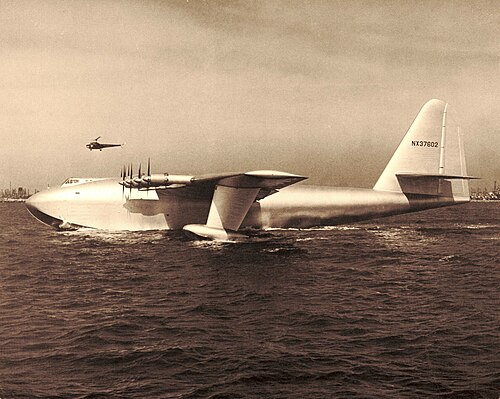
Hughes H-4 Hercules.

Hughes Galileo probe being deployed.

Hughes-built NASA Surveyor lunar lander.