Gaochang, also called Khocho, Karakhoja, Qara-hoja, Kara-Khoja or Karahoja, was a ruined ancient oasis city on the northern rim of the inhospitable Taklamakan Desert in present-day Xinjiang, China. The site is also known in published reports as Chotscho, Khocho, Qocho or Qočo. During the Yuan dynasty and Ming dynasty, Gaochang was referred to as "Halahezhuo" (Qara-khoja) and Huozhou.
The Buddhist stupa of Gaochang ruins
Painted warriors, Yanghai tomb, Gaochang Prefecture period, 327-460 CE
Mummy of the Qushi Kingdom (麹氏王国) general Zhangxiong (583-633 CE, 左卫大将军张雄). Xinjiang Museum
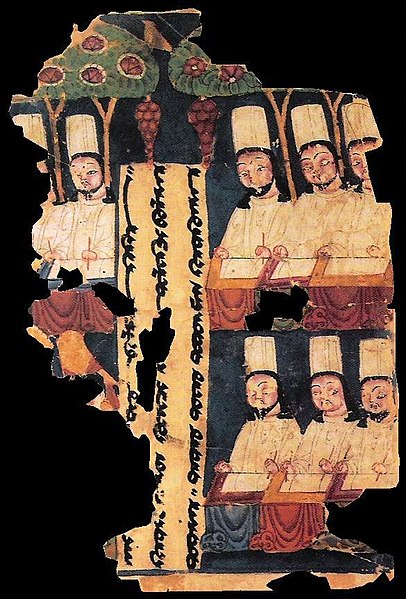
Manichaean priests, writing at their desks. Manuscript from Qocho. 8th/9th century
The Taklamakan Desert is a desert in Southwestern Xinjiang in Northwest China. Located inside the Tarim Basin in Southern Xinjiang, it is bounded by the Kunlun Mountains to the south, the Pamir Mountains to the west, the Tian Shan range to the north, and the Gobi Desert to the east.
View of the Taklamakan desert
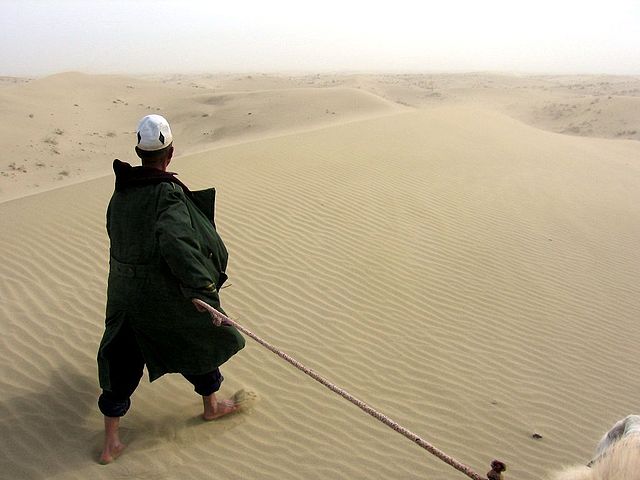
Desert life near Yarkand
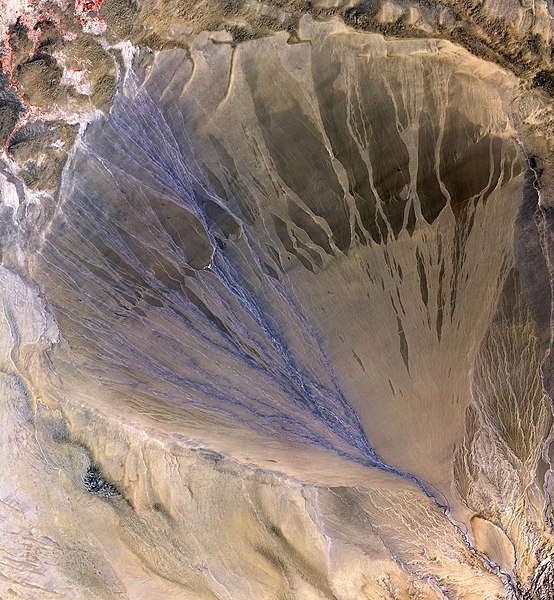
The Molcha (Moleqie) River forms a vast alluvial fan at the southern border of the Taklamakan Desert, as it leaves the Altyn-Tagh mountains and enters the desert in the western part of the Qiemo County. The left side appears blue from water flowing in many streams. The picture is taken in May, when the river is full with the snow/glacier meltwater.