Genesis (spacecraft)
Videos
Genesis was a NASA sample-return probe that collected a sample of solar wind particles and returned them to Earth for analysis. It was the first NASA sample-return mission to return material since the

In its collecting configuration, the Genesis spacecraft exposed several types of solar wind collectors, as well as ion and electron monitors.

Instruments of the Genesis spacecraft

The spacecraft in the Payload Hazardous Servicing Facility, with both solar arrays deployed
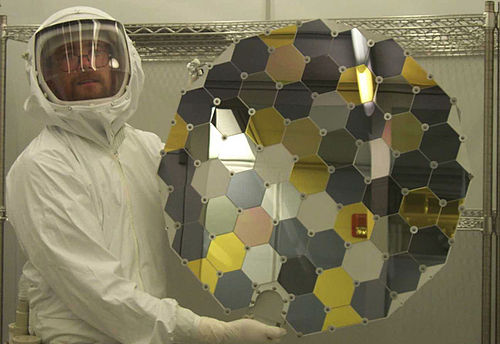
A Genesis collector array in the clean lab at Johnson Space Center. The hexagons consist of a variety of ultra-pure, semiconductor-grade wafers, including silicon, corundum, gold on sapphire, diamond-like carbon films, and other materials.
Stardust (spacecraft)
Videos
Stardust was a 385-kilogram robotic space probe launched by NASA on 7 February 1999. Its primary mission was to collect dust samples from the coma of comet Wild 2, as well as samples of cosmic dust, a
Genesis (spacecraft)
…contact again at 3 g to start the parachute release sequence. Instead, no contact was ever made. The same general parachute concept was also used on the Stardust cometary sample return spacecraft, which landed successfully in 2006. NASA investigation board chair Michael Ryschkewitsch noted that none of the…

Artist's impression of Stardust collecting dust particles from Comet Wild 2

Stardust awaiting testing of the solar arrays

The solar arrays being checked in the Payload Hazardous Servicing Facility

Stardust being checked before encapsulation