George Washington's crossing of the Delaware River, which occurred on the night of December 25–26, 1776, during the American Revolutionary War, was the first move in a complex and surprise military ma

Washington Crossing the Delaware, a 19th century painting by George Caleb Bingham depicting Washington and Continental Army troops crossing the river prior to the Battle of Trenton on the morning of December 26, 1776

The cover of Thomas Paine's The American Crisis, published the week before Washington's covert crossing of the Delaware, infused a much-needed sense of optimism into Continental Army troops, who were beginning to doubt their ability to prevail militarily against the British Army, then the largest and most powerful army in the world. It also inspired delegates in the Second Continental Congress, who were troubled by recent Continental Army military defeats.

The Passage of the Delaware, an 1819 portrait depicting the crossing by Thomas Sully

Reenactors cross the Delaware in Durham boats on December 25, 2005
American Revolutionary War
Videos
The American Revolutionary War, also known as the Revolutionary War or American War of Independence or simply the American Revolution, was the armed conflict that comprised the final eight years of th
George Washington's crossing of the Delaware River
…George Washington's crossing of the Delaware River, which occurred on the night of December 25–26, 1776, during the American Revolutionary War, was the first move in a complex and surprise military maneuver organized by George Washington, the commander-in-chief of the Continental Army, which…
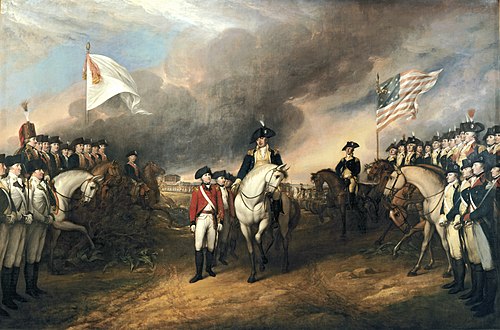
Surrender of Lord Cornwallis

Battle of Guilford Courthouse 15 March 1781

Battle of Trenton by Charles Mc Barron

Battleof Longisland