Georgian Golden Age
Videos
The Georgian Golden Age describes a historical period in the High Middle Ages, spanning from roughly the late 11th to 13th centuries, during which the Kingdom of Georgia reached the peak of its power
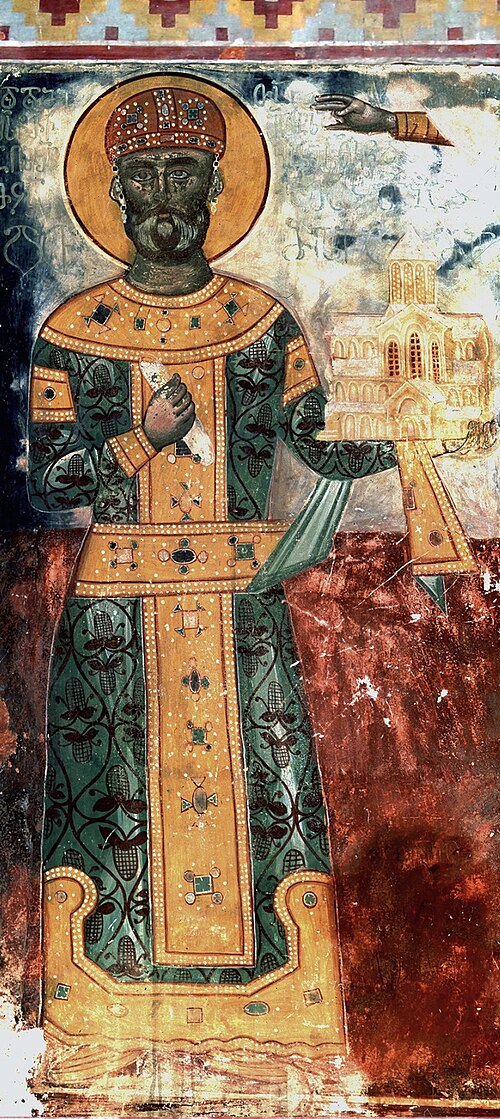
David the Builder, the original architect of the Golden Age. Fresco from Gelati monastery.

Gelati Theotokos. The use of costly mosaics in church decorations heralded Georgia's imperial ambitions.

Archangel of Kintsvisi, complete with scarce and expensive natural ultramarine paint, evidences increasing sophistication and resources of Georgian masters following the reign of George III

Golden cross of Queen Tamar, composed of rubies, emeralds, and large pearls
Georgian Orthodox Church
Videos
The Apostolic Autocephalous Orthodox Church of Georgia, commonly known as the Georgian Orthodox Church or the Orthodox Church of Georgia, is an autocephalous Eastern Orthodox church in full communion

Svetitskhoveli, the nation's premier patriarchal cathedral and a UNESCO World Heritage Site, in Mtskheta.

Saint Nino of Cappadocia, baptizer of the Georgians.

Jvari Monastery, near Mtskheta, one of Georgia's oldest surviving monasteries (6th century)

Virgin Mary as Hodegetria with Archangels from the Tsilkani Cathedral in Georgia, 13th century