Germania (book)
Videos
The Germania, written by the Roman historian Publius Cornelius Tacitus around 98 AD and originally titled On the Origin and Situation of the Germans, is a historical and ethnographic work on the Germa
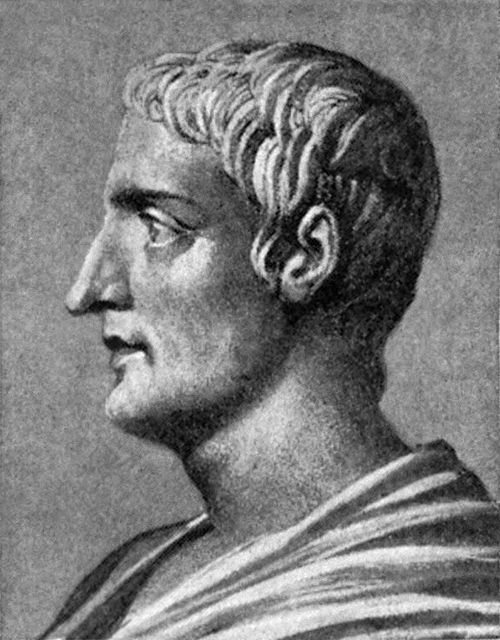
Tacitus (1920 illustration)

Germaniae veteris typus (Old Germany) edited by Willem and Joan Blaeu), 1645, based on information from Tacitus and Pliny
Pliny the Elder
Videos
Gaius Plinius Secundus, known in English as Pliny the Elder, was a Roman author, naturalist, scientist, naval and army commander of the early Roman Empire, procurator, and friend of the emperor Vespas
Germania (book)
…never travelled to Germania, thus his information is second-hand at best. Ronald Syme supposed that Tacitus closely copied the lost Bella Germaniae of Pliny the Elder, since the Germania is in some places outdated: in its description of Danubian groups, says Syme, "they are loyal clients of the Empire ... Which is…

19th-century portrait of Pliny the Elder

One of the Xanten Horse-Phalerae located in the British Museum, measuring 10.5 cm (4.1 in). It bears an inscription formed from punched dots: PLINIO PRAEF EQ; i.e., Plinio praefecto equitum, "Pliny prefect of cavalry". It was perhaps issued to every man in Pliny's unit. The figure is the bust of the emperor.

City and Lake of Como, painted by Jean-Baptiste-Camille Corot, 1834

Colossal head of Titus, son of Vespasian. Glyptothek, Munich