German–Soviet Union relations date to the aftermath of the First World War. The Treaty of Brest-Litovsk, dictated by Germany ended hostilities between Russia and Germany; it was signed on March 3, 1918. A few months later, the German ambassador to Moscow, Wilhelm von Mirbach, was shot dead by Russian Left Socialist-Revolutionaries in an attempt to incite a new war between Russia and Germany. The entire Soviet embassy under Adolph Joffe was deported from Germany on November 6, 1918, for their active support of the German Revolution. Karl Radek also illegally supported communist subversive activities in Weimar Germany in 1919.

German and Bolshevik troops fraternizing in the area of the Yaselda River, February 1918

Treaty of Rapallo, Joseph Wirth with Leonid Krasin, Georgy Chicherin and Adolf Joffe, 1922

Cheka Trial in Leipzig, 1925

Georgy Chicherin and Nikolai Krestinsky in Berlin, 1925
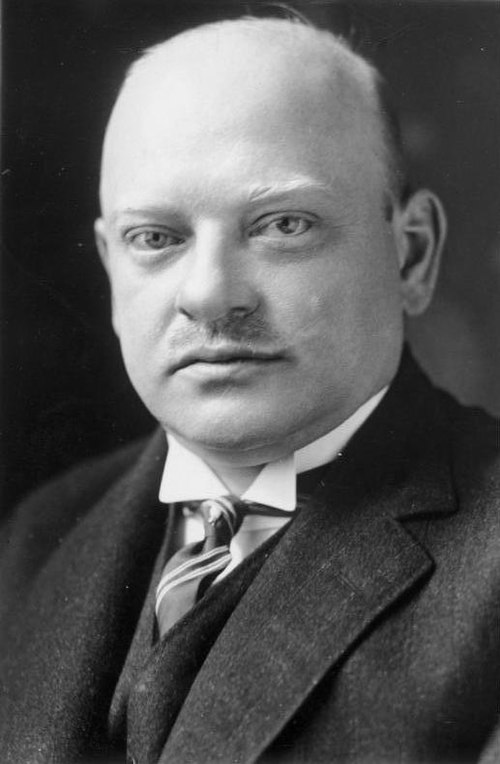
Gustav Stresemann
Videos
Gustav Ernst Stresemann was a German statesman who served as chancellor of Germany from August to November 1923, and as foreign minister from 1923 to 1929. His most notable achievement was the reconciliation between Germany and France, for which he and French Prime Minister Aristide Briand received the Nobel Peace Prize in 1926. During a period of political instability and fragile, short-lived governments, Stresemann was the most influential politician in most of the Weimar Republic's existence.

Streseman (middle) with the German delegation at the 1925 Locarno Treaties, Autochrome by Roger Dumas

1929 Autochrome of Streseman in The Hague by Stéphane Passet

Stresemann in September 1929 shortly before his death with his wife Käth and son Wolfgang