Geshtinanna
Videos
Geshtinanna was a Mesopotamian goddess best known due to her role in myths about the death of Dumuzi, her brother. It is not certain what functions she fulfilled in the Mesopotamian pantheon, though h

Fragment of a marble bowl from Uruk inscribed with the name of Geshtinanna, currently housed in the British Museum

An Old Babylonian tablet inscribed with a lamentation over the death of Dumuzi, currently in the collection of Louvre Museum
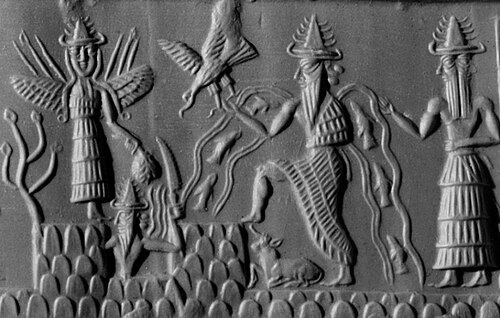
Ea En Ki
Inanna
Videos
Inanna is the ancient Mesopotamian goddess of war, love, and sex. She is also associated with political power, divine law, sensuality, and procreation. Originally worshipped in Sumer, she was known by
Geshtinanna
…association with the scribal arts and dream interpretation is well attested. She could serve as a scribe in the underworld, where according to the myth Inanna's Descent she had to reside for a half of each year in place of her brother. Evidence for the worship of Geshtinanna is mostly available from the Early…
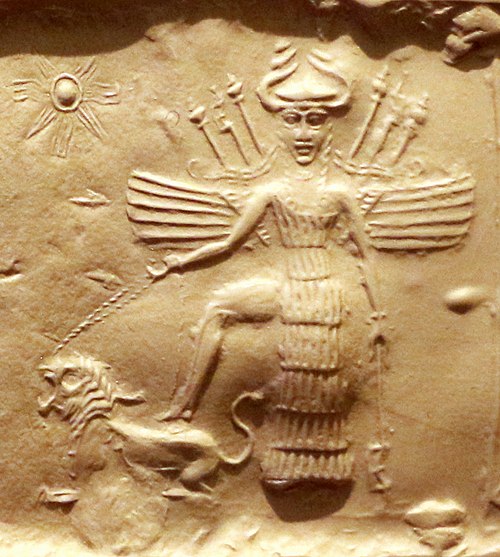
Goddess Ishtar on an Akkadian seal, 2350–2150 BCE. She is equipped with weapons on her back, has a horned helmet, places her foot in a dominant posture upon a lion secured by a leash and is accompanied by the star of Shamash.
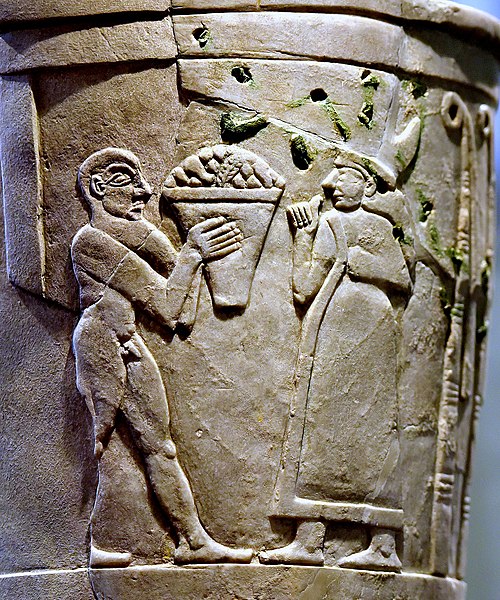
Inanna receiving offerings on the Uruk Vase, circa 3200–3000 BCE
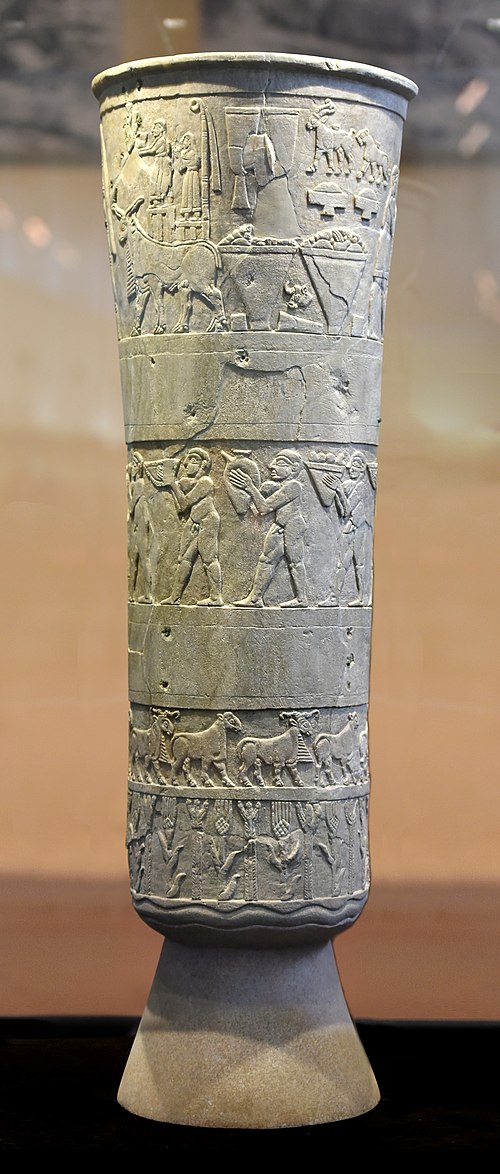
The Uruk Vase (Warka Vase), depicting votive offerings to Inanna (3200–3000 BCE)

Tablet of Lugal-kisalsi. The symbol for Inanna is in the 2nd column from the right.