Geta (footwear)
Videos
Geta are traditional Japanese footwear resembling flip-flops. A kind of sandal, geta have a flat wooden base held on the foot with a fabric thong, and are elevated with up to three "teeth," which keep

A pair of geta

Geta unearthed from the tomb of Zhu Ran from the Three Kingdoms period in China
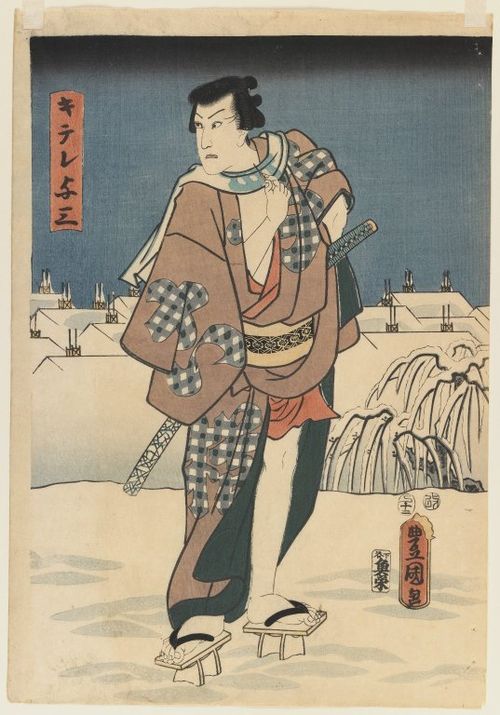
Utagawa Toyokuni III (Kunisada)

Person wearing geta and tabi
Zori
Videos
Zori, also rendered as zōri, are thonged Japanese sandals made of rice straw, cloth, lacquered wood, leather, rubber, or—most commonly and informally—synthetic materials. They are a slip-on descendant
Geta (footwear)
…only with yukata or other informal Japanese clothes or Western clothes, there is no need to wear socks. Ordinarily, people wear slightly more formal zori when wearing tabi. Geta are worn with the foot overhanging the back and a finger-width of space between the strap and the skin webbing between the toes…

Setta, a type of zori

Zori were traditionally made at home, as were waraji. Note twine warp, held between hands and toes, and loose-fiber weft, to his right.

Pictorial instructions on how to weave wara-zōri or waraji in Hida Minzoku Mura Folk Village; woven footwear is uncommonly produced, especially for practical necessity, in Japan in the present day.

Similar roughly-woven festival zori, but with the straps wrapped in fabric before being twisted together