Geuzen
Videos
Geuzen was a name assumed by the confederacy of Calvinist Dutch nobles, who from 1566 opposed Spanish rule in the Netherlands. The most successful group of them operated at sea, and so were called Wat

Battle between Dutch and Spanish ships on the Haarlemmermeer, 26 May 1573. Sailing before the wind from the right are the Spanish ships, identified by the flags with a red cross. Approaching from the left are the ships of the Sea Beggars. Hendrick Cornelisz Vroom.

Relief of Leiden by the 'Sea Beggars' on flat-bottomed boats, on 3 October 1574, during the Siege of Leiden. Otto van Veen, 1574.

Traditional emblem of the Geuzen

William II de la Marck (1542–1578), a leader of the Sea Beggars
Liever Turks dan Paaps
Videos
Liever Turks dan Paaps, also Liever Turksch dan Paus, was a Dutch Protestant slogan during the Dutch Revolt of the end of the 16th century. The slogan was used by the Dutch mercenary naval forces in t
Geuzen
…naval challenge, by the Ottomans in the Mediterranean and the Dutch in north European waters, would be to the advantage of both of its foes. The slogan Liever Turks dan Paaps seems to have been largely rhetorical, and their beggars medals in the form of a half moon were meant symbolically. The Dutch hardly contemplated life…
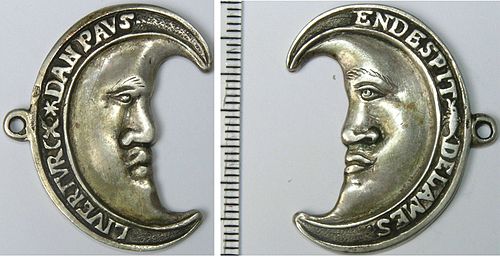
A Dutch crescent-shaped Geuzen medal at the time of the anti-Spanish Dutch Revolt, with the slogan "Liver Turcx dan Paus" ("Rather Turkish than Pope..."), and "En Despit de Lames", French for "In Spite of Blades."