Ghazal
Videos
Ghazal is a form of amatory poem or ode, originating in Arabic poetry that often deals with topics of spiritual and romantic love. It may be understood as a poetic expression of both the pain of loss,
An illustrated headpiece from a mid-18th century collection of ghazals and rubāʻīyāt


Amir Khusrow teaching his disciples. Khusrow is a seminal figure in the Persianate literary tradition of South Asia.
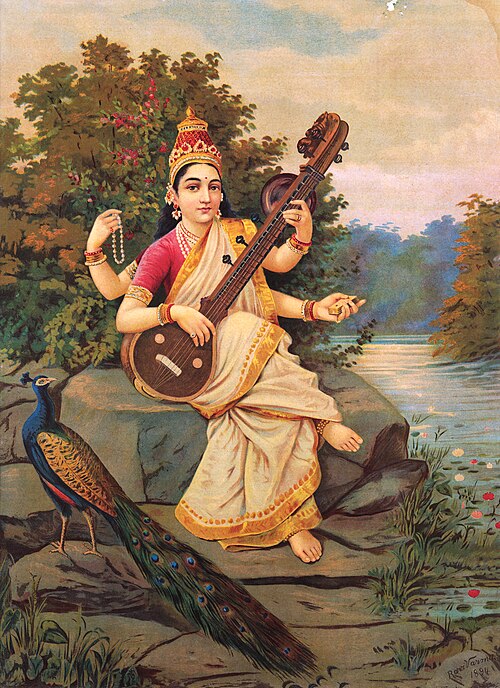
Raja Ravi Varma, Goddess Saraswati
Jagjit Singh
Videos
Jagjit Singh was an Indian composer, singer and musician. He composed and sang in numerous languages and is credited for the revival and popularity of ghazal, an Indian classical art form, by choosing
Ghazal
…a broader audience through South Asian film music (Bollywood and Lollywood). In the 20th century, performers such as Begum Akhtar, Mehdi Hassan, and Jagjit Singh modernized the ghazal by incorporating varied musical elements, including Western instruments like the guitar, while maintaining classical frameworks…

Jagjit Singh performing at Rabindra Mandap, Bhubaneswar, on 7 September 2011

Jagjit Singh (middle) with poet Shahid Kabir and his son, Sameer Kabeer

Singh with Lata Mangeshkar at the audio release of Saadgi

Indian Postage stamp, 2014