Ghost Festival
Videos
The Ghost Festival or Hungry Ghost Festival, also known as the Zhongyuan Festival in Taoism and the Yulanpen Festival in Buddhism, is a traditional festival held in certain East and Southeast Asian co
A paper effigy of the Guanyin in Shatin, Hong Kong.
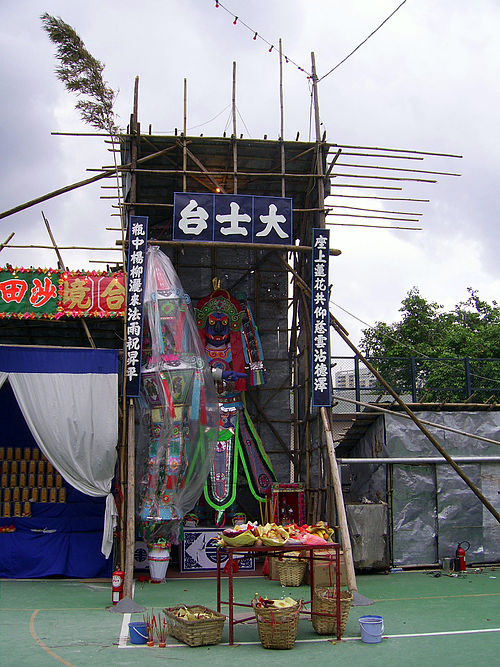

Food offerings for the Ghost Festival

Liao dynasty statue of the Eleven Headed Guanyin in Dule Temple in Tianjin, China.

A Chinese wood cut of Mulian asking the Buddha to save his mother, who has turned into a hungry ghost from hell.
Styrax benzoin
Videos
Styrax benzoin is a species of tree native to Indochina and western Malesia. Common names for the tree include gum benjamin tree, loban, kemenyan, onycha, and Sumatra benzoin tree.
Ghost Festival
…to their ancestors even after their deaths. Activities during the month would include preparing ritualistic food offerings, burning incense containing Styrax benzoin, and burning joss paper, a papier-mâché form of material items such as clothes, gold, and other fine goods for the visiting spirits of the ancestors…

Styrax benzoin Köhler–s Medizinal Pflanzen 133