Givat HaMoreh
Videos
Givat HaMoreh is a hill in northern Israel on the northeast side of the Jezreel Valley. The highest peak reaches an altitude of 515 metres, while the bottom of the Jezreel Valley is situated at an alt

"Givat HaMoreh" (Moreh Hill) south of Mount Tabor

The Nebi Dahi maqam for the burial place of Dihyah al-Kalbi
Shechem
Videos
Shechem, also spelled Sichem and other variants, was an ancient city in the Southern Levant. Described in ancient Egyptian inscriptions from the 19th century BC as a part of Retjenu, it is also record
Givat HaMoreh
…the New International Version translation of Genesis 12:6a reads: "Abram traveled through the land as far as the site of the great tree of Moreh at Shechem" and the New King James Version translates Deuteronomy 11:30 as: "Are they (Mount Gerizim and Mount Ebal) not on the other side of the Jordan, toward…

Archaeological site of Tell Balata, identified with ancient Shechem

Balata in the 1880s in the PEF Survey of Palestine. Nablus is stated as being the location of Biblical Shechem, in contrast to the modern identification with Tell Balata.
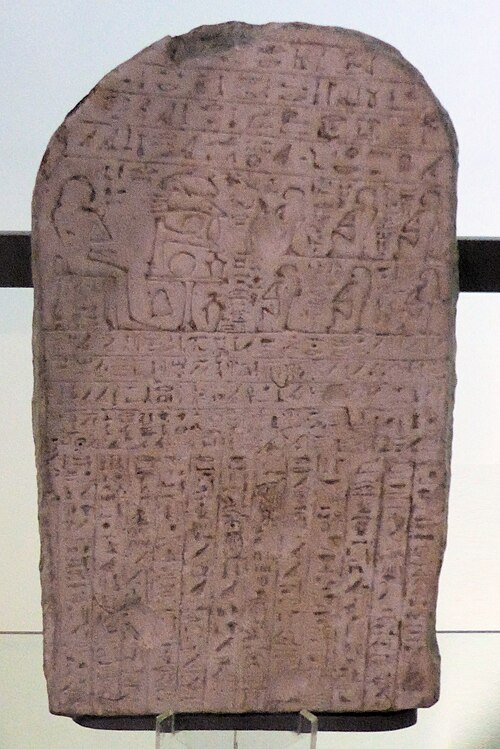
The Sebek-khu Stele, dated to the reign of Senusret III (reign: 1878–1839 BC), records the earliest known Egyptian military campaign in the Levant. The text reads "Then Sekmem fell, together with the wretched Retenu", where Sekmem (s-k-m-m) is thought to be Shechem, and the "Retunu" or "Retjenu" a people of the Levant.

Amarna letter EA 252. Letter from Labayu (ruler of Shechem) to the Egyptian Pharaoh Amenhotep III or his son Akhenaten. 14th century BC. From Tell el-Amarna, Egypt. British Museum