The Glina massacres were killings of Serb peasants in the town of Glina in the Independent State of Croatia (NDH) that occurred between May and August 1941, during World War II. The first wave of massacres in the town began on 11 or 12 May 1941, when a band of Ustaše led by Mirko Puk murdered a group of Serb men and boys in a Serbian Orthodox church before setting it on fire. The following day, approximately 100 Serb males were murdered by the Ustaše in the nearby village of Prekopi. Estimates of the overall number of Serbs killed from 11 to 13 May range from 260 to 417. Further killings in Glina occurred between 30 July and 3 August of that same year, when 700–2,000 Serbs were massacred by a group of Ustaše led by Vjekoslav Luburić.
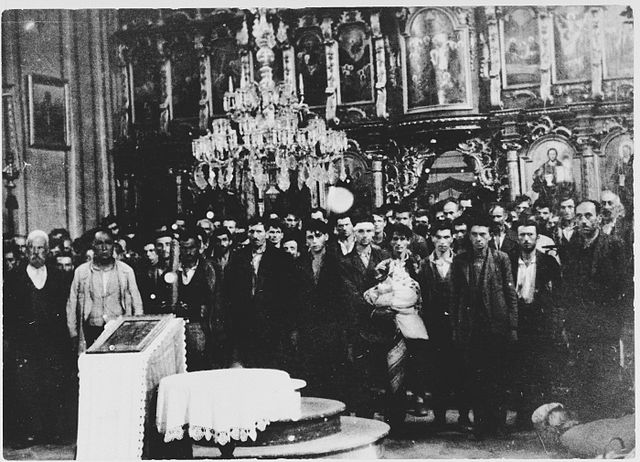
A photograph from the files of Zagreb police chief Božidar Cerovski showing Serbs from Glina gathered in a Serbian Orthodox church prior to the second Glina massacre, 30 July 1941.
Banovina or Banija is a geographical region in central Croatia, between the Sava, Una, Kupa and Glina rivers. The main towns in the region include Petrinja, Glina, Kostajnica, and Dvor. There is no clear geographical border of the region towards the west and the neighboring region of Kordun. The area of Banovina is today administratively almost entirely located within the Sisak-Moslavina County.
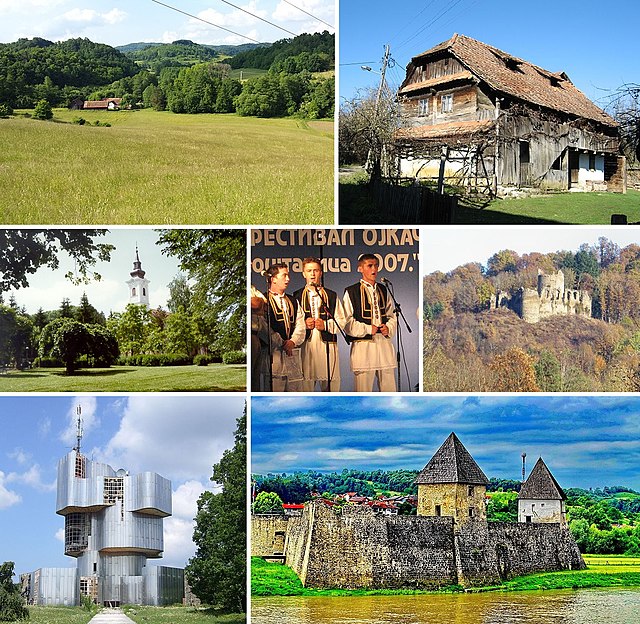
Collage of Banovina Photos
Monument to the uprising of the people of Kordun and Banija