God (word)
Videos
The English word god comes from the Old English god, which itself is derived from the Proto-Germanic *gudą. Its cognates in other Germanic languages include guþ, gudis, guð, god, and got.

KJV of 1611 (Psalms 23:1,2): Occurrence of "LORD" (and "God" in the heading)
Deity
Videos
A deity is a supernatural being considered to have authority over some aspect of the universe and/or life, with many also being considered as sacred and worthy of worship. It is "a spirit or being bel
God (word)
…by which a god is known, including "God". Consequently, its capitalized form is not used for multiple gods or when referring to the generic idea of a deity. Pronouns referring to a god are also often capitalized by adherents to a religion as an indication of reverence, and are traditionally in the masculine…

Pantheists believe that the universe itself and everything in it forms a single, all-encompassing deity.
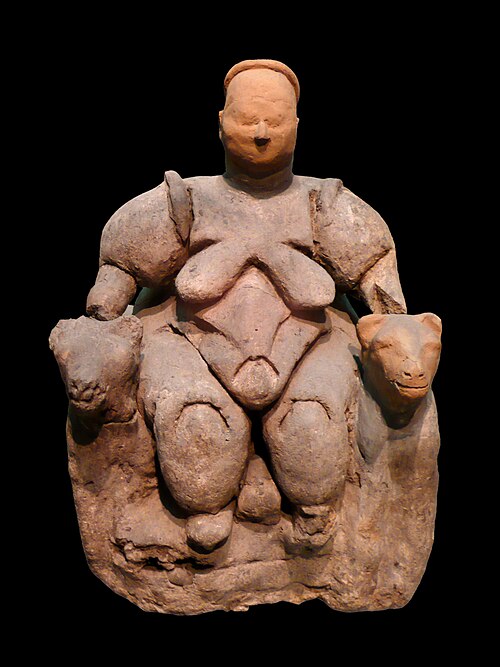
Statuette of a nude, corpulent, seated woman flanked by two felines from Çatalhöyük, dating to c. 6000 BCE, thought by most archaeologists to represent a goddess of some kind

Yoruba deity from Nigeria

Egyptian tomb painting showing the gods Osiris, Anubis, and Horus, who are among the major deities in ancient Egyptian religion