Gorée
Videos
Île de Gorée is one of the 19 communes d'arrondissement of the city of Dakar, Senegal. It is an 18.2-hectare island located two kilometres at sea from the main harbour of Dakar, famous as a destinatio

View of the island

Drawing of the castle, fort and harbor of Gorée from the Atlas Blaeu-Van der Hem.

The Dutch established the forts of Nassau (1628) and Orange (1639). Coloured engraving, Holland, 17th century

British capture of Gorée during the Seven Years' War, 29 December 1758
Atlantic slave trade
Videos
The Atlantic slave trade or transatlantic slave trade involved the transportation by slave traders of enslaved African people to the Americas. This trade was operated by slave ships from both Europe a
Gorée
…45-acre) island located two kilometres (1.1 nmi; 1.2 mi) at sea from the main harbour of Dakar (), famous as a destination for people interested in the Atlantic slave trade. Its population as of the 2013 census was 1,680 inhabitants, giving a density of 5,802 inhabitants per square kilometre (15,030/sq mi), which is only…
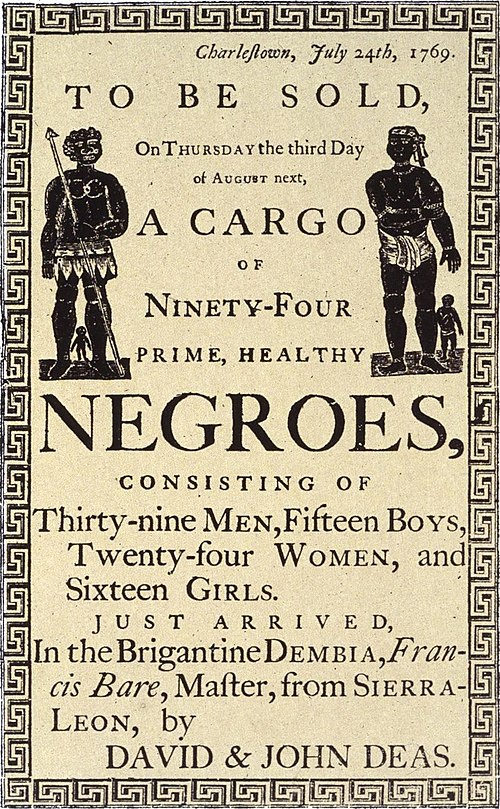
Reproduction of a handbill advertising a slave auction in Charleston, British Province of South Carolina, in 1769

Portuguese mariners used caravel ships and traveled south along the West African coast and colonised Cape Verde in 1462.

Noah curses Ham by Gustave Doré – the curse of Ham was used as a justification to enslave Africans.

Elmina Castle in the Guinea coast, present-day Ghana, was built in 1482 by Portuguese traders. Its primary purpose was trading in gold, but when the outward slave trade from the Gold Coast began, it was used in the slave trade. The Gold Coast was a late entrant to the outward slave trade (though there was an inward trade to supply workers in the gold mines).