Gordon McKay
Videos
Gordon McKay (1821–1903) was an American businessman and philanthropist. An important figure in the mechanization of the shoe industry, his most lucrative idea was to lease his "McKay machines" rather than selling them outright, collecting a small royalty on each pair of footwear made with his equipment. He then secured his market position by, helping create the United Shoe Machinery Corporation cartel with his potential competitors. Upon his death, after providing for his family and mistresses, he left the bulk of his estate to Harvard University as an endowment to support capable professors to train future engineers. The gift grew to over half a billion dollars and was indirectly responsible for Harvard's inability to merge with MIT in the early 20th century.


N.S. Shaler, geologist and scientific racist responsible for McKay's massive bequest to Harvard University

Indian Mound Cottage in 2011

The Great Dome at MIT, free of Harvard in part due to the legal effects of McKay's bequest
Bell Telephone Company
Videos
The Bell Telephone Company was the initial corporate entity from which the Bell System originated to build a continental conglomerate and monopoly in telecommunication services in the United States and Canada.


Gardiner Hubbard, first president and a trustee of the Bell Telephone Company, and father-in-law of Alexander Graham Bell
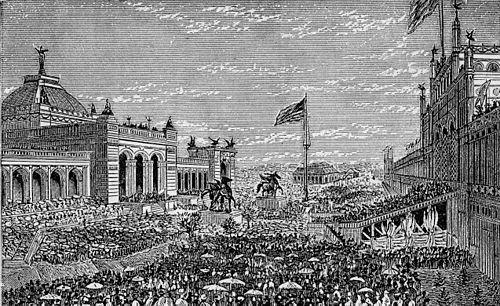
The Centennial Exhibition in Philadelphia, 1876, brought Bell international attention.

Alexander Graham Bell ceremonially inaugurating the first New York-to-Chicago telephone line in 1892