Great Hinckley Fire
Videos
The Great Hinckley Fire was a conflagration in the pine forests of the U.S. state of Minnesota that ignited on September 1, 1894, which burned an area of at least 200,000 acres, including the town of

Hinckley, Minnesota after the 1894 fire

Eastern Minnesota Railway #105 (Ed Barry's Engine)

Great Northern Railway #125 (William Best's Engine)

The Hinckley Fire Museum
Firestorm
Videos
A firestorm is a conflagration which attains such intensity that it creates and sustains its own wind system. It is most commonly a natural phenomenon, created during some of the largest bushfires and
Great Hinckley Fire
…ground with flammable debris. Also contributing was a temperature inversion that trapped the gases from the fires. The scattered blazes united into a firestorm. At noon, a strong wind began to blow, and an ominous cloud of smoke hung over the town. The smoke had been noted earlier that morning, but initially…

A view of one of the Tillamook Burn fires in August 1933

A firestorm after the bombing of Hiroshima

A picture of a pyro-cumulonimbus taken from a commercial airliner cruising at about 10 km. In 2002 various sensing instruments detected 17 distinct pyrocumulonimbus cloud events in North America alone.
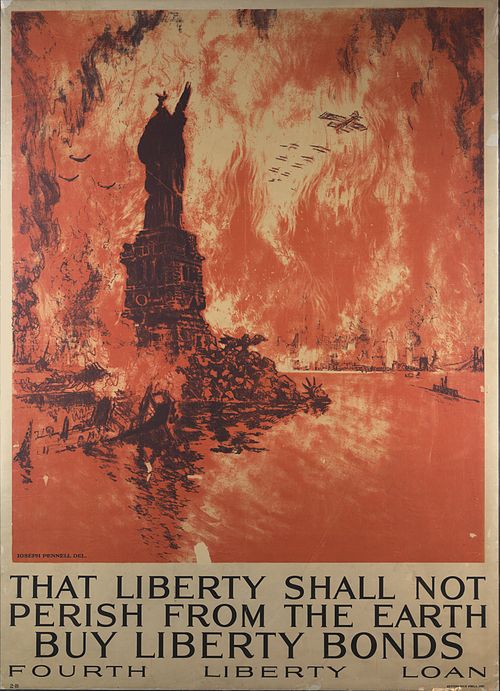
Joseph Pennell's 1918 prophetic Liberty bond poster calls up the pictorial image of a destroyed New York City, totally engulfed in a firestorm. At the time, the armaments available to the world's various air forces were not powerful enough to produce such a result.