Great Plague of London
Videos
The Great Plague of London, lasting from 1665 to 1666, was the most recent major epidemic of the bubonic plague to occur in England. It happened within the centuries-long Second Pandemic, a period of
Collecting the dead for burial during the Great Plague


Rattus rattus, the black rat. Smaller than Rattus norvegicus, the brown rat, which later supplanted it, it is also keener to live near humankind. Timber houses and overcrowded slums provided excellent homes. The link between the rat as reservoir of infection and host to fleas which could transfer to man was not understood. Efforts were made to eliminate cats and dogs: if anything, this encouraged the rats. Body lice were also important plague vectors.
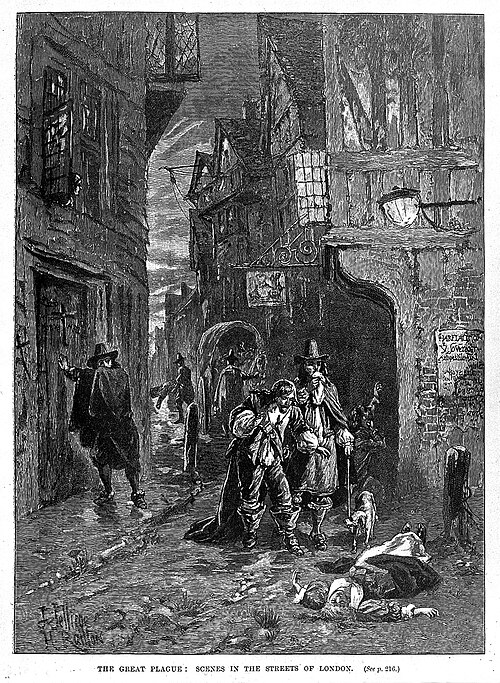
Two men discovering a dead woman in the street

Scenes in London during the plague
Great Fire of London
Videos
The Great Fire of London was a major conflagration that occurred in central London from Sunday 2 September to Wednesday 5 September 1666, gutting the medieval City of London inside the old Roman city
Great Plague of London
…unrecorded. It is not clear how many people caught the disease and made a recovery because only deaths were recorded and many records were destroyed in the Great Fire of London the following year. In the few districts where intact records remain, plague deaths varied between 30% and over 50% of the total population. Vincent…

The Great Fire of London, depicted by an unknown painter (1675), as it would have appeared from a boat in the vicinity of Tower Wharf on the evening of Tuesday, 4 September 1666. To the left is London Bridge; to the right, the Tower of London. Old St Paul's Cathedral is in the distance, surrounded by the tallest flames.

A panorama of the City of London in 1616 by Claes Visscher. The tenement housing on London Bridge (far right) was a notorious death-trap in case of fire; much would be destroyed in a fire in 1633.

Long View of London from Bankside, a panorama of London by Wenceslaus Hollar, 1647, notable for being rendered all from one viewpoint
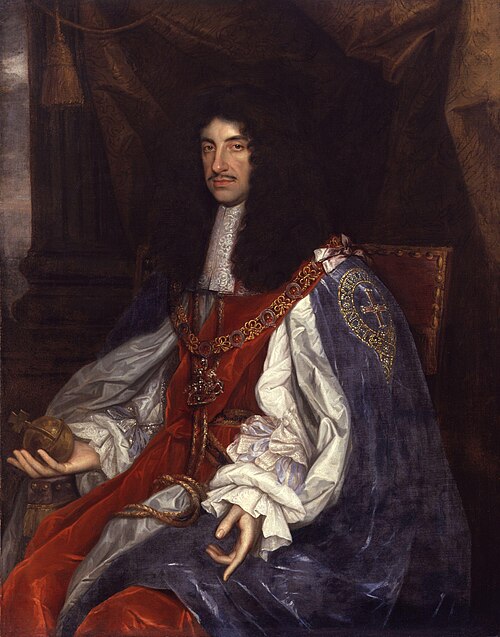
King Charles II