Great Sejm
Videos
The Great Sejm, also known as the Four-Year Sejm was a Sejm of the Polish–Lithuanian Commonwealth that was held in Warsaw between 1788 and 1792. Its principal aim became to restore sovereignty to, and

The Great Sejm adopts the Constitution of 3 May 1791 at the Royal Castle in Warsaw.

Stanisław Małachowski, Marshal of the Great Sejm

Royal Castle Senate Chamber, where the May 3 Constitution was adopted
Constitution of 3 May 1791
Videos
The Constitution of 3 May 1791, titled the Government Act, was a written constitution for the Polish–Lithuanian Commonwealth that was adopted by the Great Sejm that met between 1788 and 1792. The Comm
Great Sejm
…aim became to restore sovereignty to, and reform, the Commonwealth politically and economically. The Sejm's great achievement was the adoption of the Constitution of 3 May 1791, often described as Europe's first modern written national constitution, and the world's second, after the United States Constitution. The Polish…

Constitution of 3 May 1791, by Matejko. Foreground: King Stanisław August (left) enters St John's Cathedral, in Warsaw, where deputies will swear to uphold the Constitution. Background: the Royal Castle, where the Constitution has just been adopted.
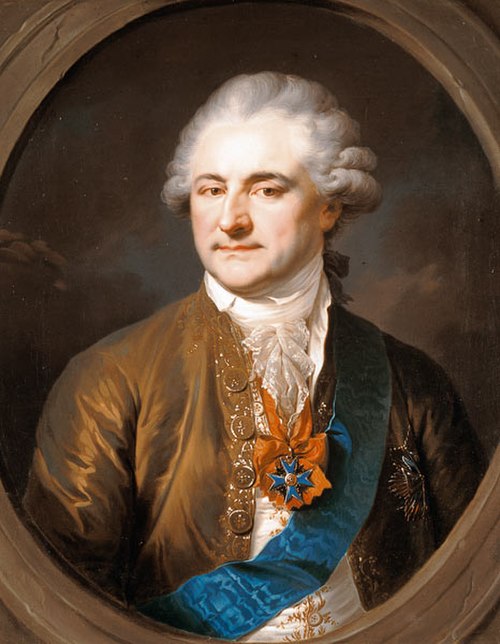
King Stanisław August Poniatowski, principal author of the Constitution of 3 May 1791. A year later, he acquiesced in its demise; this was seen by Constitution defenders as high treason, per the Constitution's Article VII and section six (sexto) of Article VIII, and per the Declaration of the Assembled Estates, of 5 May 1791.

In September 1773, Tadeusz Rejtan (on floor, lower right) tries to prevent ratification of the First Partition of the Polish–Lithuanian Commonwealth by barring other Sejm deputies from entering the Sejm chamber. Painting Rejtan, by Matejko.

From his election, King Stanisław August Poniatowski worked to develop an executive government council. In 1775, the Partition Sejm established a Permanent Council, after Russia's Catherine the Great concluded it would serve her purposes.