Great Sioux War of 1876
Videos
The Great Sioux War of 1876, also known as the Black Hills War, was a series of battles and negotiations that occurred in 1876 and 1877 in an alliance of Lakota Sioux and Northern Cheyenne against the

The Custer Fight Charles Marion Russell, 1903

Sitting Bull, a Hunkpapa, was one of the principal Sioux leaders.
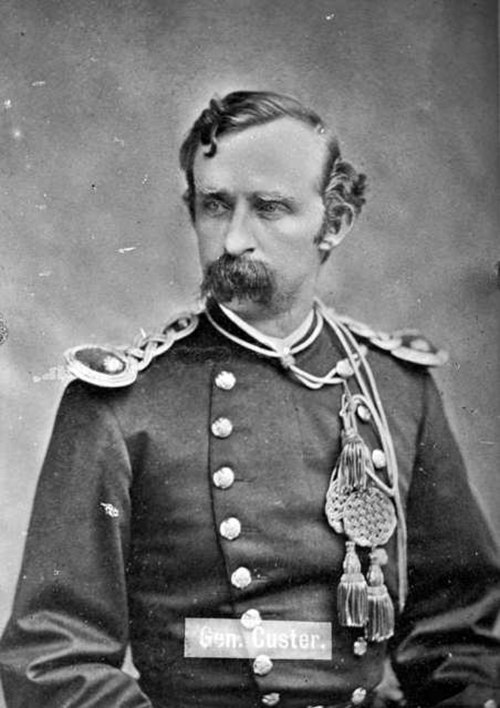
Lt. Col. George Armstrong Custer was killed at the Battle of the Little Bighorn along with 268 soldiers.

Custer and the last of his men were killed and buried here. The Indian village was on the other side of the line of trees marking the Little Bighorn River. To visit the old battlefield today it is necessary to enter the Crow Indian Reservation – it was exactly the same in 1876.
Sitting Bull
Videos
Sitting Bull was a Hunkpapa Lakota leader who led his people during years of resistance against United States government policies. Sitting Bull was killed by Indian agency police accompanied by U.S. o
Great Sioux War of 1876
…men now in our country there and let us alone." Although the chiefs were unsuccessful in finding a peaceful solution, they did not join Crazy Horse and Sitting Bull in the warfare that followed. Later that year, a US commission was sent to each of the Indian agencies to hold councils with the Lakota. They hoped to…

An illustration of Sitting Bull, published in the December 8, 1877, issue of Harper's Weekly

The area of Big Horn County, Montana where the Battle of the Little Bighorn was fought

Fort Buford's commanding officer's quarters in present-day Williams County, North Dakota, where Sitting Bull's surrender ceremony was held