Greek alphabet
Videos
The Greek alphabet has been used to write the Greek language since the late 9th or early 8th century BC. It was derived from the earlier Phoenician alphabet, and is the earliest known alphabetic scrip

Dipylon inscription, one of the oldest preserved inscriptions in the Greek alphabet, c. 740 BC

Early Greek alphabet on pottery in the National Archaeological Museum of Athens, c. 420 BC

Excerpt from the second-century Bankes Homer manuscript, already displaying a hand very much like the fourth-century biblical uncial
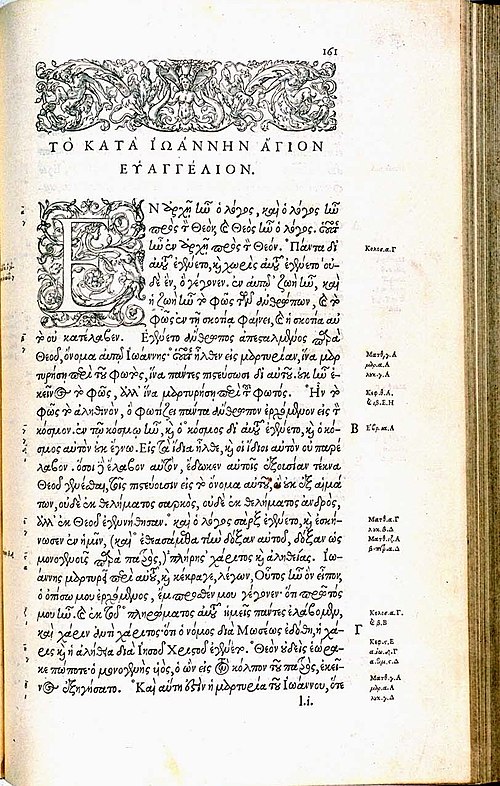
A 16th-century edition of the New Testament (Gospel of John), printed in the renaissance typeface Grecs du roi by Claude Garamond
Phoenician alphabet
Videos
The Phoenician alphabet is an abjad that was used across the Mediterranean civilization of Phoenicia for most of the 1st millennium BC. It was one of the first alphabets, attested in Canaanite and Ara
Greek alphabet
…The Greek alphabet has been used to write the Greek language since the late 9th or early 8th century BC. It was derived from the earlier Phoenician alphabet, and is the earliest known alphabetic script to systematically write vowels as well as consonants. In Archaic and early Classical times, the Greek…

Study of Phoenician medals, by Jean-Jacques Barthélemy

Photograph of section of the Zayit Stone, 10th century BC: (right-to-left) the letters waw, he, het, zayin, tet (𐤅𐤄𐤇𐤆𐤈)

Phoenician alphabet, deciphered by Jean-Jacques Barthélemy in 1758. No.1 is from the Cippi of Melqart, No.2 is from the coins, and No. 3 is from the Pococke Kition inscriptions.

A page from the Samaritan version of Leviticus