Greek resistance
Videos
The Greek resistance involved armed and unarmed groups from across the political spectrum that resisted the Axis occupation of Greece in the period 1941–1944, during World War II. The largest group wa

Athens University students parading on Greek National Independence Day (25 March) 1942, in defiance of the German and Italian occupation forces; the parade was eventually dispersed by Axis troops.
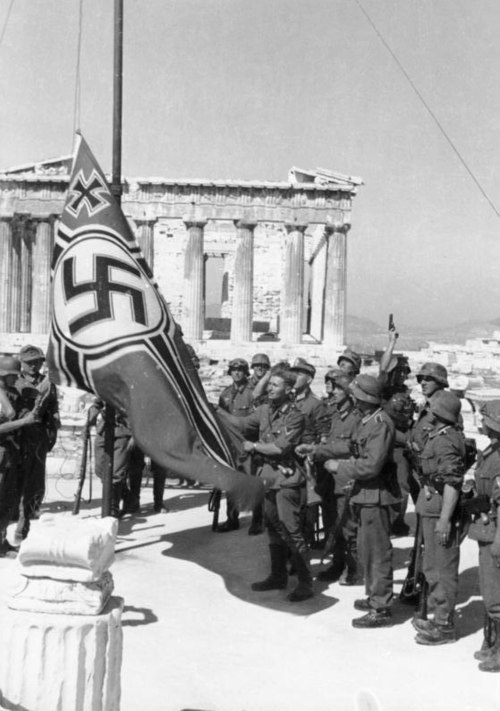
German soldiers raising the German War Flag over the Acropolis of Athens. The symbol of the country's occupation, it would be taken down in one of the first acts of the Greek Resistance.

Aris Velouchiotis, to the left, with officers of ELAS

Napoleon Zervas, leader of the military wing of the EDES, with fellow officers
The National Liberation Front, known mostly by its acronym EAM, was an alliance of various political parties and organizations which fought to liberate Greece from Axis Occupation. It was the main mov
Greek resistance
…political spectrum that resisted the Axis occupation of Greece in the period 1941–1944, during World War II. The largest group was the Communist-dominated EAM-ELAS. The Greek Resistance is considered one of the strongest resistance movements in Nazi-occupied Europe. Greek partisans, men and women known as…

Guerillas of EAM-ELAS

Conference of EAM in Kastanitsa, Thessaly

Booklet by Dimitris Glinos, "What is the National Liberation Front and what does it want?", 1944 edition