Guinea (coin)
Videos
The guinea was a coin, minted in Great Britain between 1663 and 1814, that contained approximately one-quarter of an ounce of gold. The name came from the Guinea region in West Africa, from where much
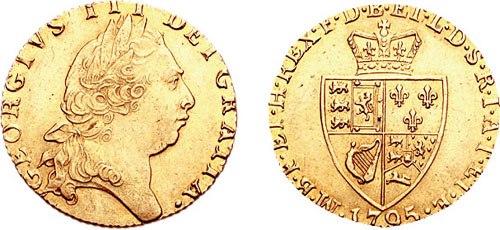
George III, one guinea ("Spade" issue, 1795)

Guinea of King Charles II

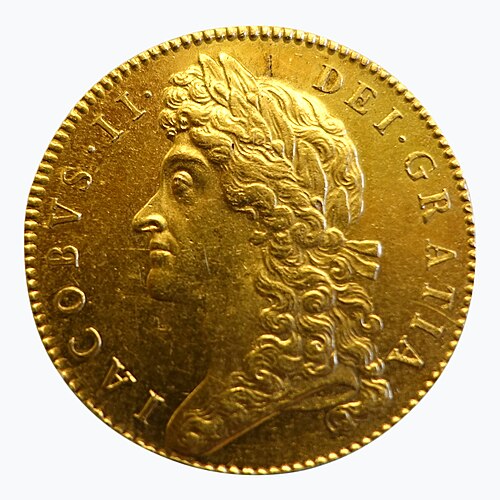
King James II, with elephant and castle under the bust, 1686
Shilling (British coin)
Videos
The British shilling, abbreviated "1s" or "1/-", was a unit of currency and a denomination of sterling coinage worth 1⁄20 of one pound, or twelve pre-decimal pence. It was first minted in England in 1
Guinea (coin)
…where much of the gold used to make the coins was sourced. It was the first English machine-struck gold coin, originally representing a value of 20 shillings in sterling specie, equal to one pound, but rises in the price of gold relative to silver caused the value of the guinea to increase, at times to as…
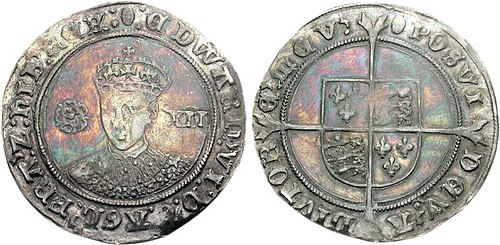
Shilling of Edward VI, struck between 1551 and 1553

A sampler in the Guildhall Museum of Rochester illustrates the conversion between pence and shillings, going up in units of ten old pennies.

Queen Victoria Shilling, 1838–1887. Engravers William Wyon and Jean Baptiste Merlen.

Queen Victoria Shilling, 1887–1889. Engravers Joseph Edgar Boehm and Leonard Charles Wyon.