Gulag
Videos
The Gulag was a system of labor camps in the Soviet Union. The word Gulag originally referred only to the division of the Soviet secret police that was in charge of running the forced labor camps from
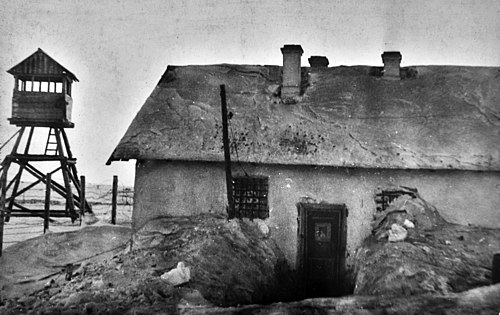
A punishment cell block in one of the subcamps of Vorkutlag, 1945

Genrikh Yagoda (middle) inspecting the construction of the Moscow-Volga canal, 1935. Behind his right shoulder is Nikita Khrushchev.

The fence at the old Gulag camp in Perm-36, founded in 1943, turned into a museum.

Central shop in Norilsk built by prisoners of the Norillag
Vorkutlag
Videos
The Vorkuta Corrective Labor Camp, commonly known as Vorkutlag, was a major Gulag labor camp in the Soviet Union located in Vorkuta, Komi Autonomous Soviet Socialist Republic, Russian Soviet Federativ
Gulag
…place of confinement. The Gulag inherited this approach from the katorga system. It is estimated that of the 40,000 people collecting state pensions in Vorkuta, 32,000 are trapped former Gulag inmates, or their descendants. According to a 2024 study, areas near Gulag camps that held a larger share of educated…

Perimeter fence and watchtower, Vorkuta Gulag.

The Vorkuta industrial labor camp complex was located 160 km above the Arctic Circle. The city had a population of approximately 15,000 and about 50 camps with more than 50,000 inmates.

Meeting of the first train in Vorkuta. Yakov Fomin, December 28, 1941.

Mikhail Maltsev and Yakov Fomin