Gumiho
Videos
A gumiho or kumiho is a creature that appears in the folktales of East Asia and legends of Korea. It is similar to the Chinese jiuweihu, the Japanese kitsune and the Vietnamese hồ ly tinh.

Kumiho illustration provided by the National Institute of Korean Language

These foxes are depicted in an classical painting from the Lotus Sutra(法華經), a Buddhist scripture from the Goryeo and Joseon periods. The foxes are fleeing from a club. There is a Buddhist doctrine that those who act foolishly are reincarnated as foxes.

This is a traditional Korean funeral ritual tool called Kkokdu, depicting a guide of the deceased wearing black clothes and riding a black fox.

Okpodong Giwanrok, a fable from the late Joseon Dynasty
Kitsune
Videos
The kitsune, in popular Japanese folklore, is a fox or fox spirit which possesses the supernatural ability to shapeshift or bewitch other life forms.
Gumiho
…nine-tailed fox') is a creature that appears in the folktales of East Asia and legends of Korea. It is similar to the Chinese jiuweihu, the Japanese kitsune and the Vietnamese hồ ly tinh. Gumiho is a term that originally referred to a magical fox appearing in Korean novels of the Joseon dynasty, or was used…

The moon on Musashi Plain (fox) by Tsukioka Yoshitoshi

The Fushimi Inari shrine in Kyoto features numerous kitsune statues.
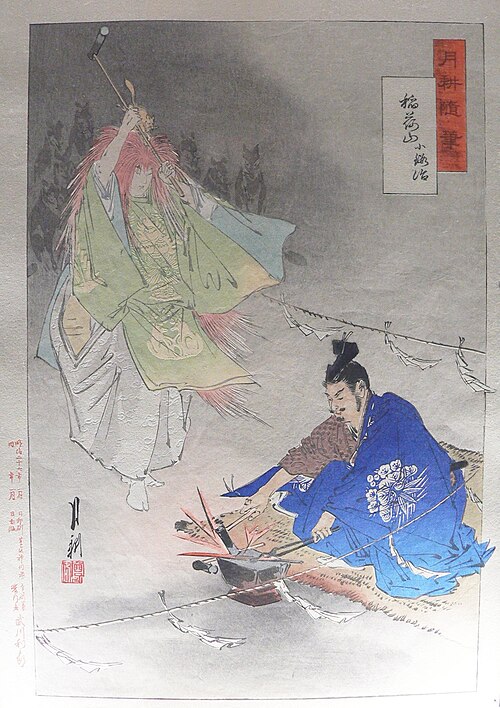
Inari Ōkami and its fox spirits help the blacksmith Sanjō Munechika [ja] forge the blade Kogitsune-maru ('Little Fox') at the end of the 10th century. The legend is the subject of the noh drama Sanjō Kokaji.
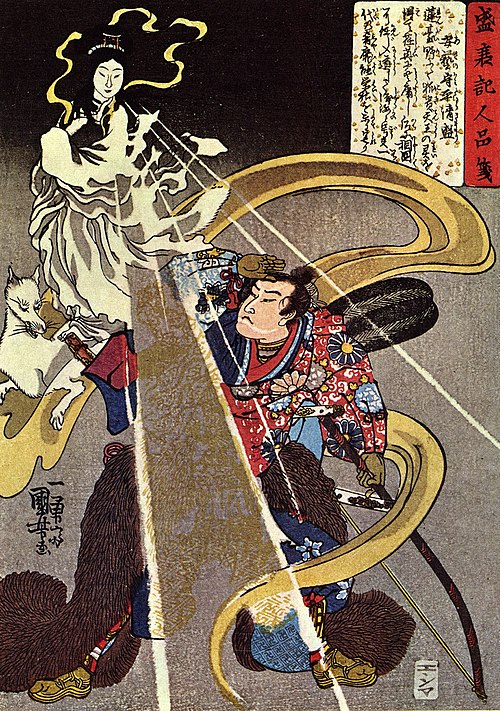
Inari Ōkami appears to a warrior accompanied by a kitsune. This portrayal shows the influence of Dakiniten concepts from Buddhism. Print by Utagawa Kuniyoshi.