H II region
Videos
An H II region is a region of interstellar atomic hydrogen that is ionized. It is typically in a molecular cloud of partially ionized gas in which star formation has recently taken place, with a size
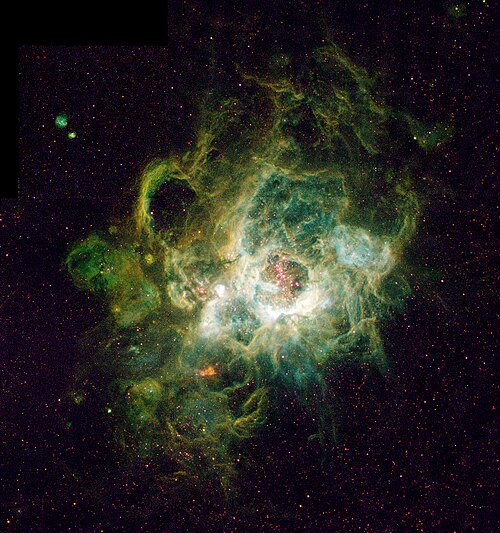
NGC 604, a giant H II region in the Triangulum Galaxy, taken by the Hubble Space Telescope
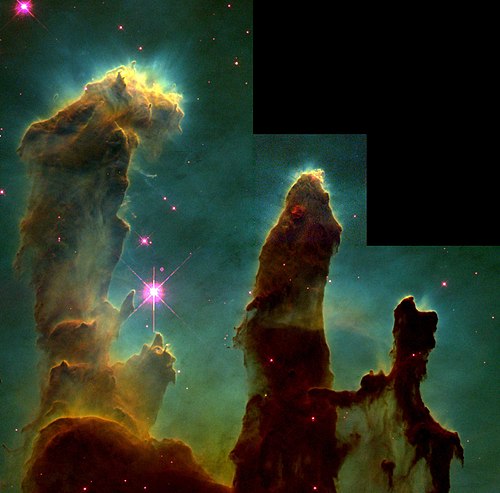
Dark star-forming regions within the Eagle Nebula commonly referred to as the Pillars of Creation

Orion Nebula
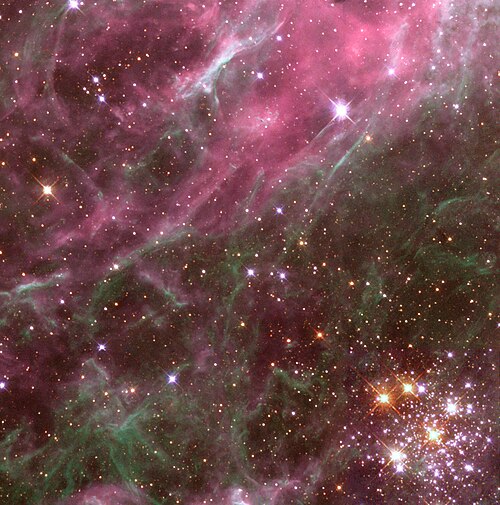
A small portion of the Tarantula Nebula, a giant H II region in the Large Magellanic Cloud
Nebula
Videos
A nebula is a distinct luminescent part of interstellar medium, which can consist of ionized, neutral, or molecular hydrogen and also cosmic dust. Nebulae are often star-forming regions, such as the P
H II region
…1774, and described it later as "an unformed fiery mist, the chaotic material of future suns". In early days astronomers distinguished between "diffuse nebulae" (now known to be H II regions), which retained their fuzzy appearance under magnification through a large telescope, and nebulae that could be resolved…

True color image of the Trifid Nebula, showing complex gas and plasma structure
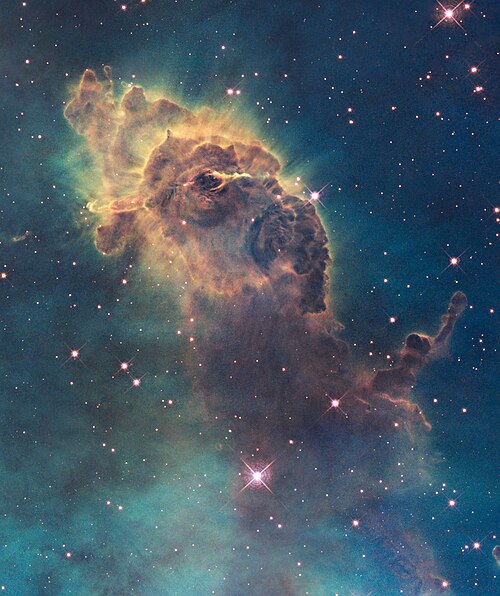
Portion of the Carina Nebula
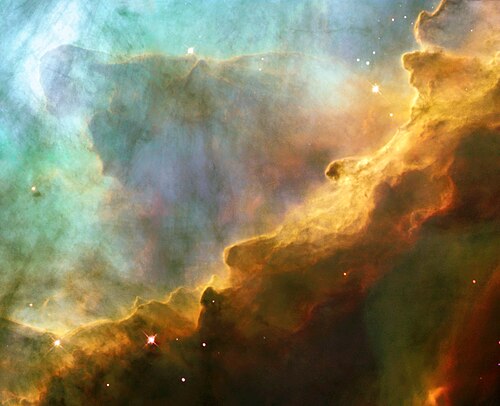
The Omega Nebula, an example of an emission nebula