Haḍḍa is a Greco-Buddhist archeological site located ten kilometers south of the city of Jalalabad, in the Nangarhar Province of eastern Afghanistan.
Buddhist stupas at Hadda, by William Simpson, 1881.
The village of Hadda, seen from Tapa Shotor in 1976.
Seated Buddha, Tapa Shotor monastery (Niche V1), 2nd century CE, Hadda
Head of a Buddha or Bodhisattva, facing (4th-5th century), probably Hadda, Tapa Shotor.
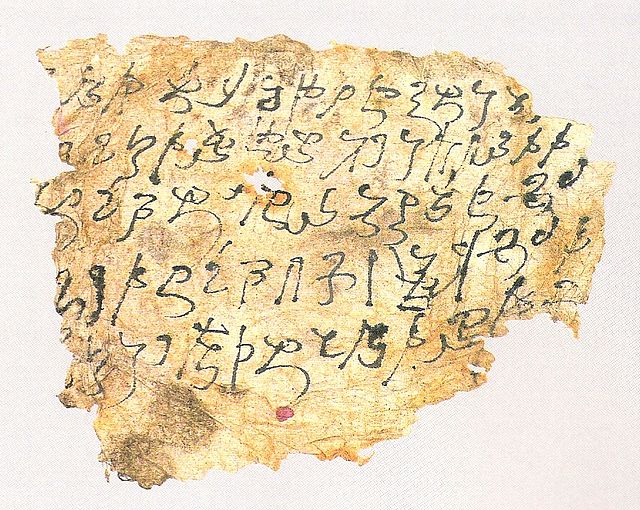
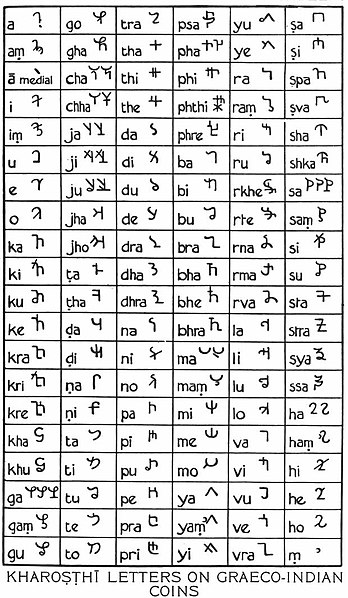
The Kharoṣṭhī script, also known as the Gāndhārī script, was an ancient Indic script used by various peoples from the north-western outskirts of the Indian subcontinent to Central Asia via Afghanistan. An abugida, it was introduced at least by the middle of the 3rd century BCE, possibly during the 4th century BCE, and remained in use until it died out in its homeland around the 3rd century CE.
Kharosthi
Kharoshthi letters.
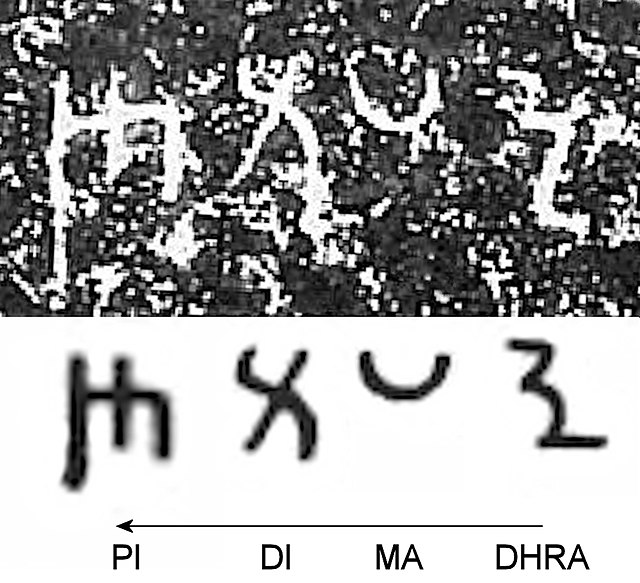
The words "Dhrama-Dipi" ("Inscription of the Dharma") in Kharosthi, in Edict No.1 of the Shahbazgarhi Major Rock Edict of Ashoka (circa 250 BCE).
Kharoshthi on a coin of Indo-Greek king Artemidoros Aniketos, reading "Rajatirajasa Moasa Putasa cha Artemidorasa".