Hadrian's Wall
Videos
Hadrian's Wall is a former defensive fortification of the Roman province of Britannia, begun in AD 122 in the reign of the Emperor Hadrian. Running from Wallsend on the River Tyne in the east to Bowne

A view of a partially-reconstructed section of Hadrian's Wall. The upright stones on top are a modern addition, to deter people from walking on it.
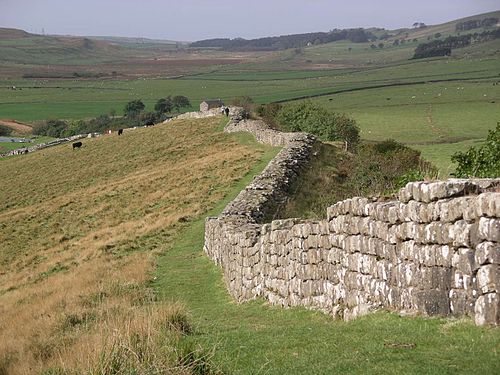
Sections of Hadrian's Wall still remain, particularly in its hilly central sector. Little remains in lowland regions, where it was used as a source of stone for new buildings.

Hadrian's Wall facing east towards Crag Lough (the lake in the picture). The rocky outcrop is the Whin Sill, of volcanic origin.

Bronze head of the Emperor Hadrian, who commissioned the wall's construction, found in 1834 in the River Thames in London, around 280 miles (450 km) south of Hadrian's Wall
Roman Britain
Videos
Roman Britain was the territory that became the Roman province of Britannia after the Roman conquest of Britain, consisting of a large part of the island of Great Britain. The occupation lasted from 4
Hadrian's Wall
…Hadrian's Wall is a former defensive fortification of the Roman province of Britannia, begun in AD 122 in the reign of the Emperor Hadrian. Running from Wallsend on the River Tyne in the east to Bowness-on-Solway in the west of what is…

Conquests under Aulus Plautius, focused on the commercially valuable southeast of Britain

Roman campaigns 43–60 AD
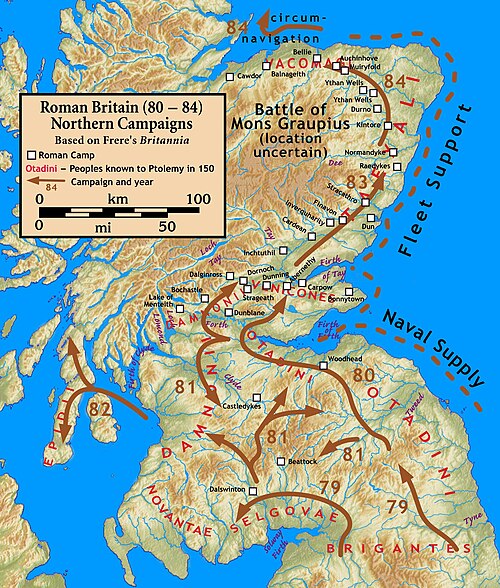
Agricola's campaigns 80-84 AD

In 84 AD