Hagfish
Videos
Hagfish, of the class Myxini and order Myxiniformes, are eel-shaped jawless fish. Hagfish are the only known living animals that have a skull but no vertebral column, however they do have rudimentary
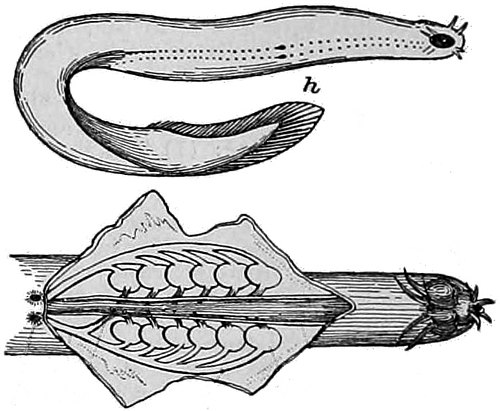
Two views of the hagfish (Myxini glutinosa) with analytical overlays and dissection, published 1905

Pacific hagfish at 150 m depth, California, Cordell Bank National Marine Sanctuary

An Atlantic hagfish (Myxine glutinosa) using its slime to get away from a kitefin shark (Dalatias licha) and an Atlantic wreckfish (Polyprion americanus)

Pacific hagfish trying to hide under a rock
Agnatha
Videos
Agnatha or jawless fish is a paraphyletic infraphylum of animals in the subphylum Vertebrata of the phylum Chordata, characterized by the lack of jaws. The group consists of both living and extinct cl
Hagfish
…Hagfish, of the class Myxini (also known as Hyperotreti) and order Myxiniformes , are eel-shaped jawless fish (occasionally called slime eels). Hagfish are the only known living animals that have a skull but no vertebral column, however they do have rudimentary…

Одинока мінога

Eptatretus hexatrema 15727711

Pacific lamprey facing right

Thyestes verrucosus 22DB