Haggadah
Videos
The Haggadah is a Jewish text that sets forth the order of the Passover Seder. According to Jewish practice, reading the Haggadah at the Seder table is a fulfillment of the mitzvah to each Jew to tell their children the story from the Book of Exodus about God bringing the Israelites out of slavery in Egypt, with a strong hand and an outstretched arm.


Page from the Golden Haggadah, probably Barcelona, c. 1320. Upper right: the Dance of Miriam (Ex. 15:20), upper left: the master of the house distributing the matzot (unleavened bread) and the haroset (sweetmeat), lower right: cleaning of the house, lower left: slaughtering the Passover lamb and cleansing dishes (hagalat kelim).

Rylands Hagaddah. Above, cooking the lamb and marking the door. Below, the Seder.

Detail of the Exodus from Egypt in the Birds' Head Haggadah: bird-headed Jews bake matzos for the journey and leave Egypt with their possessions (left-hand page); a blank-faced Pharaoh and Egyptian soldiers pursue the Jewish nation (right-hand page)
Passover
Videos
Passover, also called Pesach, is a major Jewish holiday for Rabbinical Judaism, Karaite Judaism, and Samaritanism, one of the Three Pilgrimage Festivals, that celebrates the Exodus of the Israelites from slavery in Biblical Egypt.
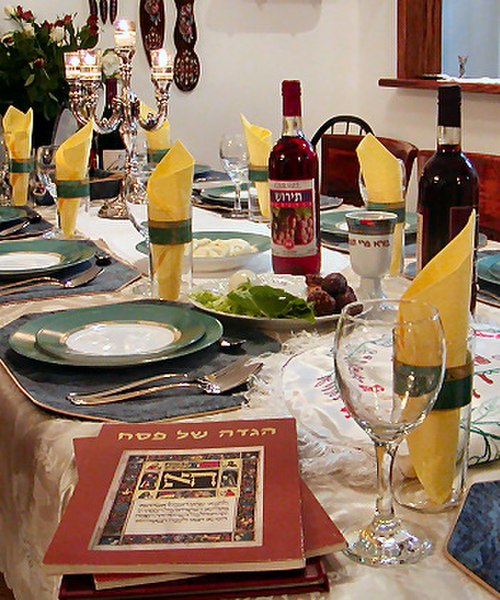

Illustration of The Exodus from Egypt, 1907
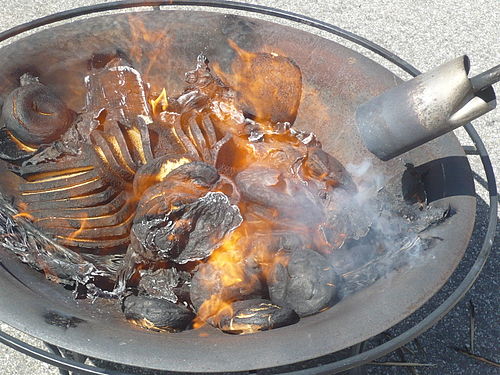
Burning chametz on the morning before Passover begins

The former President of Israel Reuven Rivlin sells the leaven of the Beit HaNassi (the official residence of the president), to Shlomo Amar, the Sephardic Chief Rabbi of Israel and the Rishon LeZion, in order that Amar will later sell it to a non-Jew.