Hamsa
Videos
Page
The hamsa, also known as the hand of Fatima, is a palm-shaped amulet popular throughout North Africa and in the Middle East and commonly used in jewellery and wall hangings. Depicting the open hand, an image recognized and used as a sign of protection in many times throughout history, the hamsa has been traditionally believed to provide defense against the evil eye.
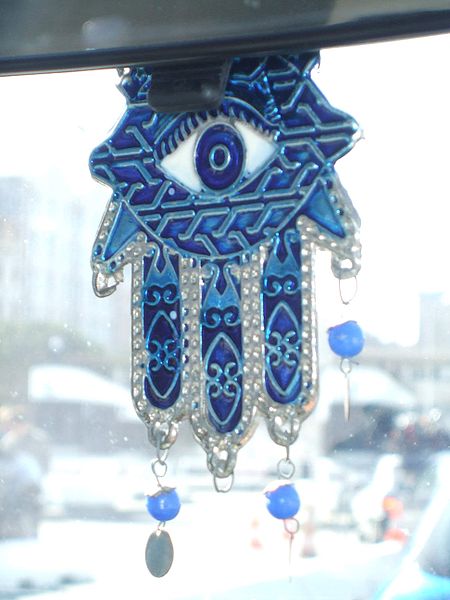
A hanging hamsa in Tunisia

A Punic stela from Carthage dedicated to Tinnit and Baal Hammon with a carved open right hand, as well as sign of Tinnit, sign of Baal Hammon above, Caduceus and naval symbols
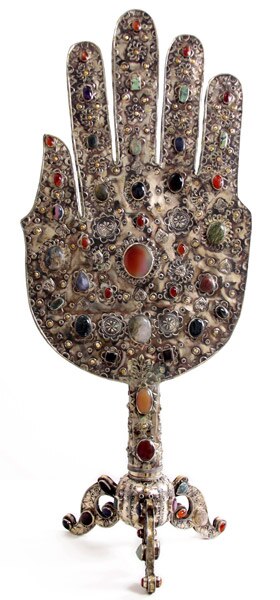
Hamsa Amulet
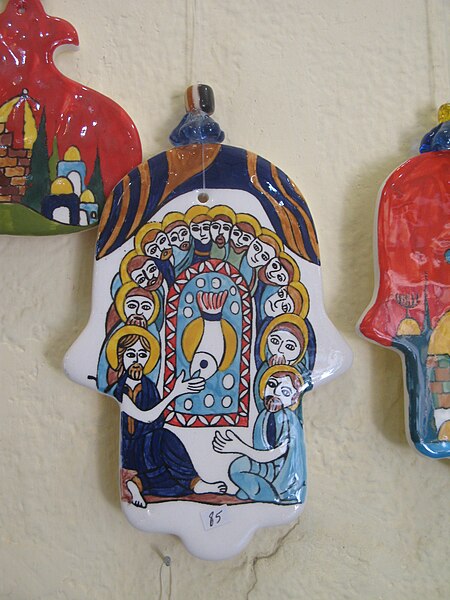
A ceramic hamsa depicting Jesus and his disciples
Fatima
Videos
Page
Fatima bint Muhammad, commonly known as Fatima al-Zahra', was the daughter of the Islamic prophet Muhammad and his wife Khadija. Fatima's husband was Ali, the fourth of the Rashidun Caliphs and the first Shia Imam. Fatima's sons were Hasan and Husayn, the second and third Shia Imams, respectively. Fatima has been compared to Mary, mother of Jesus, especially in Shia Islam. Muhammad is said to have regarded her as the best of women and the dearest person to him. She is often viewed as an ultimate archetype for Muslim women and an example of compassion, generosity, and enduring suffering. It is through Fatima that Muhammad's family line has survived to this date. Her name and her epithets remain popular choices for Muslim girls.
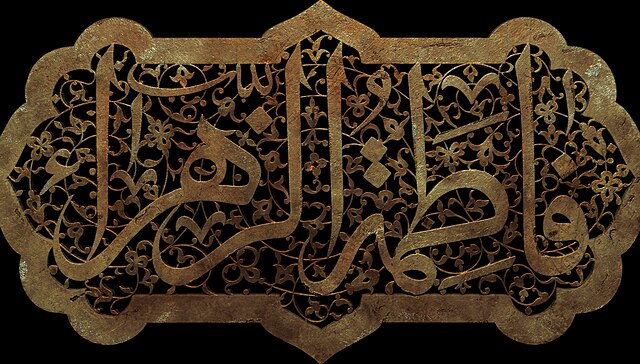
Artwork with Fatima's name, reconstruction from a Safavid piece
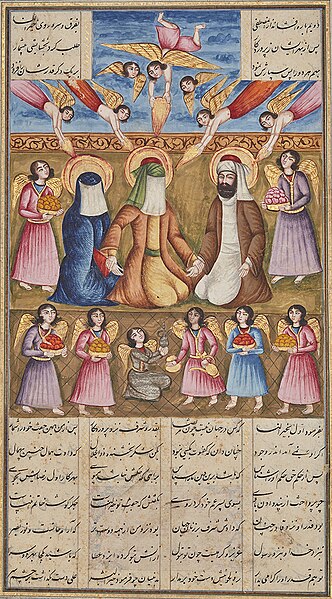
The marriage of Ali and Fatima. Artwork created in Iran, c. 1850
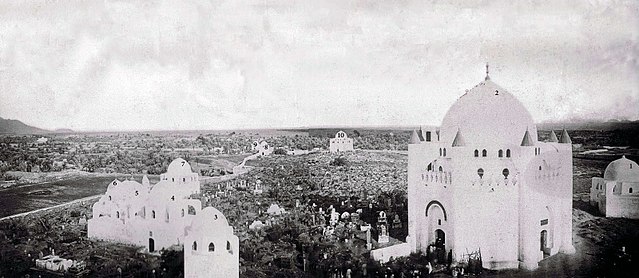
Al-Baqi' cemetery is a probable site for Fatima's grave, depicted here before the demolition of its mausoleums by the Wahhabis in 1927.

Arabic calligraphy of the verse of purification