Han poetry
Videos
Han poetry is associated with the Han dynasty era of China, 206 BC – 220 AD, including the Wang Mang interregnum. Han poetry is considered a significant period in Classical Chinese poetry due to sever
CMOC Treasures of Ancient China exhibit – a rare surviving fragment of the Xiping Stone Classics, a series which included the Shijing poetry anthology, which was part of the legacy of poetry contributing to the Han dynastic era.


A Han dynasty terracotta horse head (1st–2nd century AD).

Su Wu in foreign captivity, where he was forced to herd sheep or goats. From the Long Corridor.
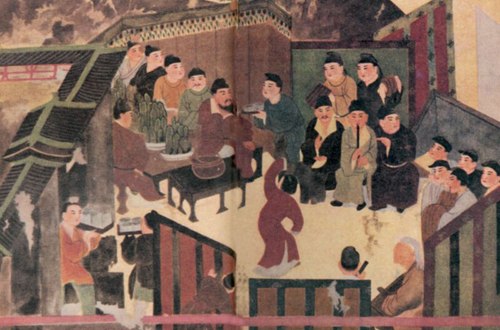
Liangyuan Gathering: Song dynasty painting of a Han dynasty literary gathering in the Liang Garden of Liu Wu, Prince of Liang. Liang was one of the principalities of the Han empire, and an area (like its Prince Liu Wu) associated with great literary attainment.
Jian'an poetry
Videos
Jian'an poetry or Chien-an poetry, refers to the styles of Chinese poetry particularly associated with the end of the Han dynasty and the beginning of the Six Dynasties era of China. This poetry categ
Han poetry
…collected popular ballads, led to the creation of what would later be known as the yuefu, a rhapsodic poetic style. Towards the end of the Han dynasty, a new style of shi poetry emerged. As the yuefu evolved into fixed-line forms resembling shi poetry, distinguishing between the two styles became increasingly difficult…

Picture of a poem attributed to Cao Bin, younger brother of Cao Zhen.

CMOC Treasures of Ancient China exhibit painted figure of a cavalryman, horse detail