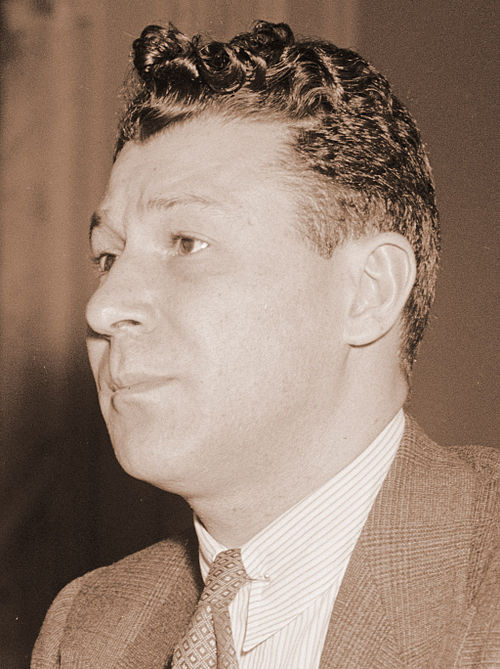
Harold or "Hal" Ware was an American Marxist, regarded as one of the Communist Party's top experts on agriculture. He was employed by a federal New Deal agency in the 1930s. He is alleged to have been a Soviet spy and is understood to have founded the "Ware Group," a covert group of operatives within the United States government aiding Soviet intelligence agents.
Ella Reeve Bloor (circa 1910)
First section of "H.R. Harrow's" agricultural recommendations to the underground Communist Party of America (November 1921)
Soviet Russia, official magazine of the Friends of Soviet Russia (cover by Lydia Gibson)
The Agricultural Adjustment Act (AAA) was a United States federal law of the New Deal era designed to boost agricultural prices by reducing surpluses. The government bought livestock for slaughter and paid farmers subsidies not to plant on part of their land. The money for these subsidies was generated through an exclusive tax on companies that processed farm products. The Act created a new agency, the Agricultural Adjustment Administration, also called "AAA" (1933–1942), an agency of the U.S. Department of Agriculture, to oversee the distribution of the subsidies. The Agriculture Marketing Act, which established the Federal Farm Board in 1929, was seen as an important precursor to this act. The AAA, along with other New Deal programs, represented the federal government's first substantial effort to address economic welfare in the United States.
Agricultural Adjustment Administration representative in his New Mexico office (1941)
A Roosevelt County, New Mexico, farmer and a County Agricultural Conservation Committee representative review the provisions of the AAA farm program to determine how it can best be applied on that particular acreage in 1934.
Barn on tenant's farm in Walker County, Alabama, 1937
Senator Elmer Thomas (left) with Claude M. Hurst and John Collier, members of the Senate Indian Affairs Committee, and unassociated (directly) with the Thomas Amendment.