Harry Cobby
Videos
Air Commodore Arthur Henry Cobby, was an Australian military aviator. He was the leading fighter ace of the Australian Flying Corps during World War I, despite seeing active service for less than a ye
Captain Harry Cobby in 1919

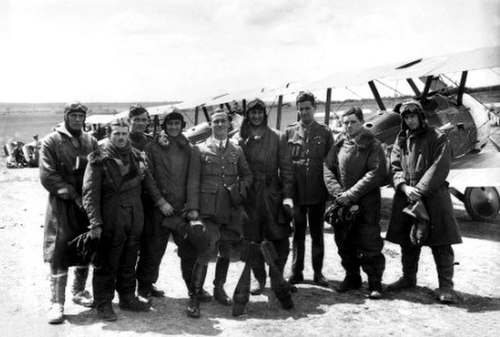
Captain Cobby (centre) with officers of A Flight, No. 4 Squadron AFC, and their Sopwith Camels on the Western Front, June 1918

Cobby in his Sopwith Camel while instructing in England, c.1918–19. He organised the high-visibility check paint pattern himself, "not for conceit, but for safety".

Group Captain Cobby (right) takes over North-Eastern Area from Air Commodore Frank Lukis (centre) in Townsville, Queensland, August 1942
Morotai Mutiny
Videos
The "Morotai Mutiny" was an incident in April 1945 involving members of the Australian First Tactical Air Force based on the island of Morotai, in the Dutch East Indies. Eight senior pilots, including
Harry Cobby
…Commanding No. 10 Operational Group (later Australian First Tactical Air Force) the following year, but was relieved of his post in the wake of the "Morotai Mutiny" of April 1945. Retiring from the Air Force in 1946, Cobby served with the Department of Civil Aviation until his death on Armistice Day in 1955. Arthur…

Air Commodore Cobby (left) and Group Captain Caldwell at Morotai in January 1945

Group Captain Wilf Arthur (pictured in North Africa in 1941) commissioned a "balance sheet" of No. 1 TAF losses vs. results in December 1944.

Caldwell (fourth from left) talking to No. 452 Squadron Spitfire pilots at Morotai in January 1945

Air Vice Marshal Jones (left) and Lieutenant General Kenney (right), in July 1945