Haruspex
Videos
A haruspex was a person trained to practise divination by the inspection of the entrails of sacrificed animals, especially the livers of sacrificed sheep and poultry, a practice called haruspicy in th
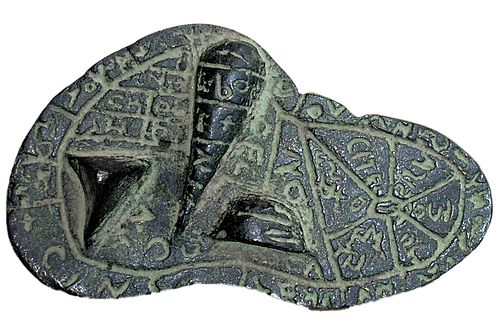
The Liver of Piacenza, a bronze diagram of the sheep's liver found near Piacenza with Etruscan inscriptions

Akkadian language clay sheep liver models written in a local dialect, recovered from the palace at Mari, dated to the 19th or 18th century BCE.

Diagram of the bronze liver of Piacenza

Relief depicting a haruspex from the Roman Temple of Hercules
Etruscan religion
Videos
Etruscan religion comprises the religious beliefs and practices of the Etruscan civilization. The Etruscans were polytheistic, and although there is some syncretism between their mythological traditio
Haruspex
…omens specifically from the liver, a practice also known by the Greek term hepatoscopy (also hepatomancy). The Roman concept is directly derived from Etruscan religion, as one of the three branches of the disciplina Etrusca. The Latin terms haruspex and haruspicina are from an archaic word, hīra = "entrails, intestines…

Etruscan votive heads IV-II century BC found in various sanctuaries of Etruria

Rare Etruscan fanu located at Orvieto.

The Mars of Todi, a life-sized Etruscan bronze sculpture of a soldier making a votive offering, most likely to Laran, the Etruscan god of war, late 5th to early 4th century BC

Funerary home at Banditaccia with couches