The heading indicator (HI), also known as a directional gyro (DG) or direction indicator (DI), is a flight instrument used in an aircraft to inform the pilot of the aircraft's heading.
A heading indicator in a small aircraft.
Flight instruments are the instruments in the cockpit of an aircraft that provide the pilot with data about the flight situation of that aircraft, such as altitude, airspeed, vertical speed, heading and much more other crucial information in flight. They improve safety by allowing the pilot to fly the aircraft in level flight, and make turns, without a reference outside the aircraft such as the horizon. Visual flight rules (VFR) require an airspeed indicator, an altimeter, and a compass or other suitable magnetic direction indicator. Instrument flight rules (IFR) additionally require a gyroscopic pitch-bank, direction and rate of turn indicator, plus a slip-skid indicator, adjustable altimeter, and a clock. Flight into instrument meteorological conditions (IMC) require radio navigation instruments for precise takeoffs and landings.
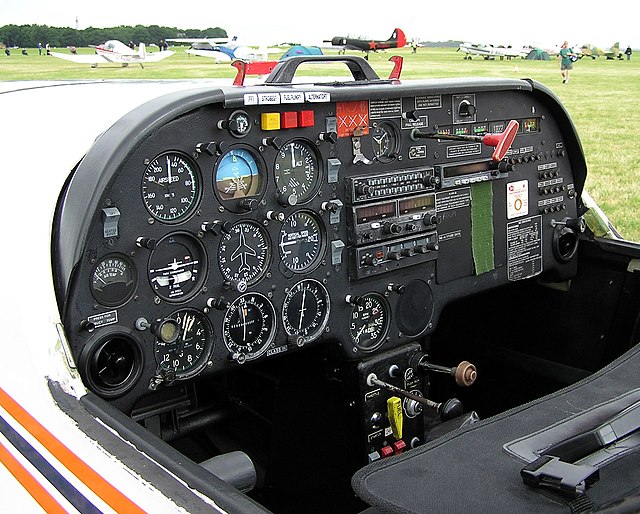
The cockpit of a Slingsby T-67 Firefly two-seat light airplane. The flight instruments are visible on the left of the instrument panel
Six basic instruments in a light twin-engine airplane arranged in a "basic-T". From top left: airspeed indicator, attitude indicator, altimeter, turn coordinator, heading indicator, and vertical speed indicator
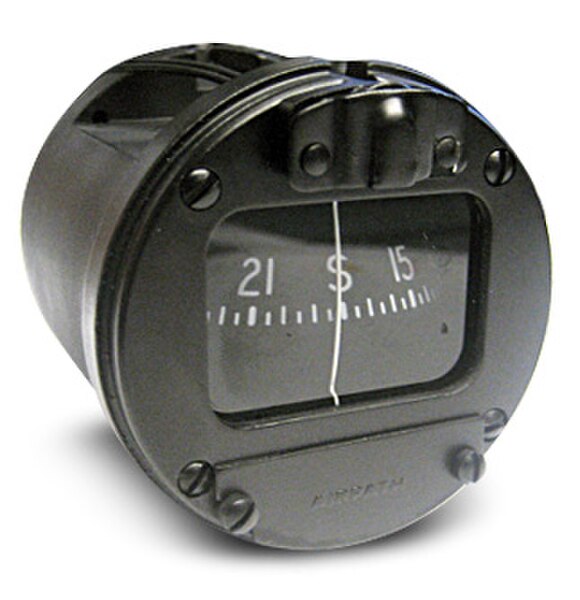
Image: Aero Magnetic Compass