Heat wave
Videos
A heat wave or heatwave, sometimes described as extreme heat, is a period of abnormally hot weather that lasts for multiple days. A heat wave is usually measured relative to the usual climate in the a
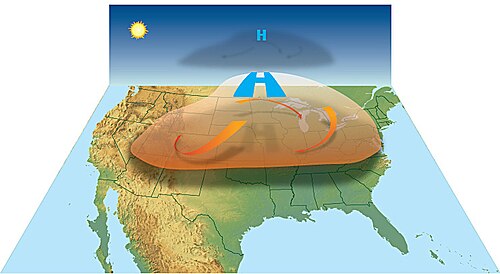
A high pressure system in the upper atmosphere traps heat near the ground, forming a heat wave (for North America in this example)

Scorched grass in Greenwich Park, London, England, during a heatwave in August 2022.

Heat stroke treatment at Baton Rouge during the 2016 Louisiana floods

The National Weather Service risk categories for NWS HeatRisk
Extreme weather
Videos
Extreme weather includes unexpected, unusual, severe, or unseasonal weather; weather at the extremes of the historical distribution—the range that has been seen in the past. Extreme events are based o

A tornado is an example of an extreme weather event.
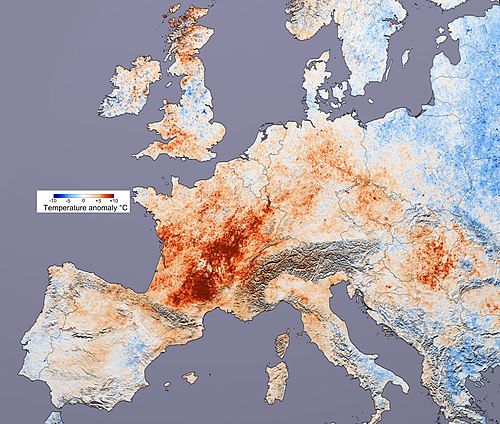
2003 European heat wave

Cold wave in continental North America from Dec. 3–10, 2013. Red color means above mean temperature; blue represents below normal temperature.

A California reservoir in 2015 with low water levels due to drought conditions. From 2011 to 2017, California experienced one of its driest periods in recorded history.