Heian period
Videos
The Heian period is the last division of classical Japanese history, running from 794 to 1185. It followed the Nara period, beginning when the 50th emperor, Emperor Kammu, moved the capital of Japan t

Miniature model of Heian-kyō, the capital during the Heian period

Byōdō-in ("Phoenix Hall"), built in the 11th century (Uji, Kyoto)

Section of a handscroll depicting a scene from the "Bamboo River" chapter of the Tale of Genji, c. 1130

Drawing of Fujiwara no Michinaga, by Kikuchi Yōsai
Nara period
Videos
The Nara period of the history of Japan covers the years from 710 to 794. It succeeded the Asuka period and is followed by the Heian period. Empress Genmei established the capital of Heijō-kyō. Except
Heian period
…The Heian period (平安時代, Heian jidai) is the last division of classical Japanese history, running from 794 to 1185. It followed the Nara period, beginning when the 50th emperor, Emperor Kammu, moved the capital of Japan to Heian-kyō (modern Kyoto). Heian (平安) means 'peace' in Japanese. It is a…

The primary building, i.e. the Daigoku-den at the Heijō Palace (In the center of the photograph: this is a modern version built for the 1300th anniversary of Nara becoming Japan's capital). Tōdai-ji's Daibutsuden and Wakakusayama can be seen in the rear (January 2010).
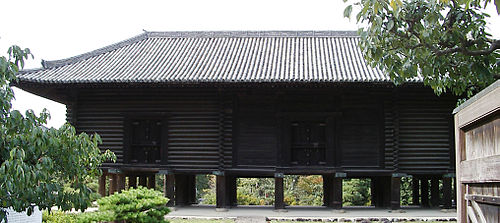
Shōsōin

The East Pagoda of Yakushi-ji temple was built in 730, during the Nara period

Kai Ichiranzu 1806