Heijō-kyō
Videos
Heijō-kyō was the Capital of Japan during most of the Nara period, from 710 to 740 and again from 745 to 784. The imperial palace is a listed UNESCO World Heritage Site together with other places in t

1/1000 scale model of Heijō-kyō
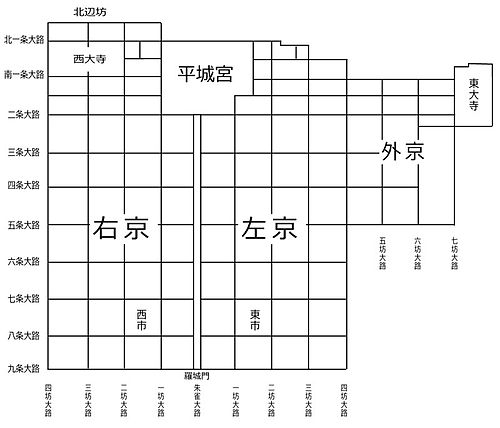
Groundplan of Heijō-kyō

Heijō-kyō ruins

Miniature model of the Heijō Palace
Nara period
Videos
The Nara period of the history of Japan covers the years from 710 to 794. It succeeded the Asuka period and is followed by the Heian period. Empress Genmei established the capital of Heijō-kyō. Except
Heijō-kyō
…Heijō-kyō (平城京; also Heizei-kyō, sometimes Nara no miyako) was the Capital of Japan during most of the Nara period, from 710 to 740 and again from 745 to 784. The imperial palace is a listed UNESCO World Heritage Site together with other places in the city of Nara…

The primary building, i.e. the Daigoku-den at the Heijō Palace (In the center of the photograph: this is a modern version built for the 1300th anniversary of Nara becoming Japan's capital). Tōdai-ji's Daibutsuden and Wakakusayama can be seen in the rear (January 2010).
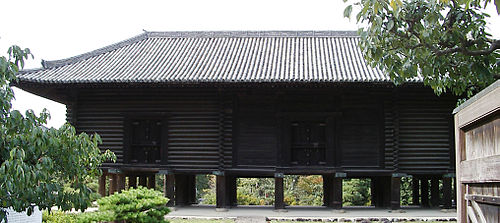
Shōsōin

The East Pagoda of Yakushi-ji temple was built in 730, during the Nara period

Kai Ichiranzu 1806