Helladic chronology
Videos
Helladic chronology is a relative dating system used in archaeology and art history. It complements the Minoan chronology scheme devised by Sir Arthur Evans for the categorisation of Bronze Age artefa
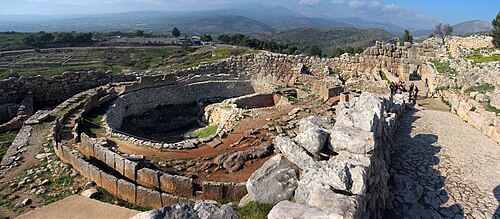
Grave Circle A Mycenae

Stirrup vase with octopus decor, Rhodes, Late Helladic III C1, c. 1200–1100 BC (Louvre).

Remains of a building from Olympia, Greece Early Helladic III 2150–2000 BC.

Matt-painted Middle Helladic pottery
Cycladic culture
Videos
Cycladic culture was a Bronze Age culture found throughout the islands of the Cyclades in the Aegean Sea. In chronological terms, it is a relative dating system for artifacts which is roughly contempo
Helladic chronology
…the cultural and geographical scope of Helladic chronology is confined to mainland Greece during the same timespan (c. 3200 – c. 1050 BC). Similarly, a Cycladic chronology system is used for artifacts found in the Aegean islands. Archaeological evidence shows that civilization developed at the same time across the region…

Frying-pan with incised decoration of a ship. Early Cycladic II, Chalandriani, Syros 2800–2300 BC

Collection of marble figurines of varying sizes. Early Cycladic II period, Keros-Syros Culture, 2800-2300 BC. National Archaeological Museum, Athens

Cycladic idol, Parian marble; 1.5 m high (largest known example of Cycladic sculpture) 2800–2300 BC

Marble seated harp player, 2800-2700 BC