A herd is a social group of certain animals of the same species, either wild or domestic. The form of collective animal behavior associated with this is called herding. These animals are known as gregarious animals.
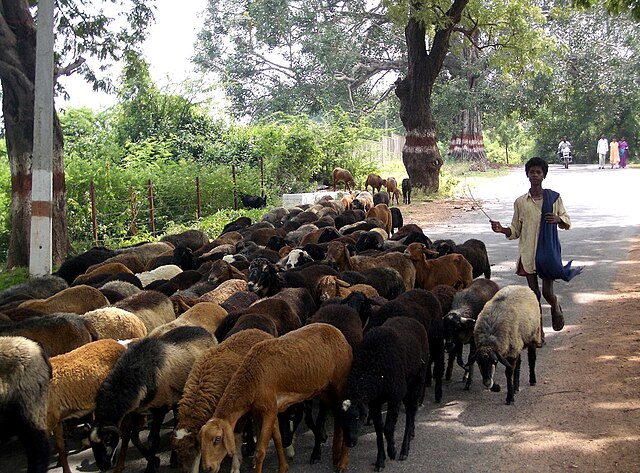
Boy herding a flock of sheep, India; a classic example of the domestic herding of animals
Wildebeest at the Ngorongoro Crater; an example of a herd in the wild
A herd of cows in Punjab.
Traditional herding of goats in Greece. Overgrazing by poorly managed traditional herding is one of the primary causes of desertification and maquis degradation.
Collective animal behavior
Collective animal behaviour is a form of social behavior involving the coordinated behavior of large groups of similar animals as well as emergent properties of these groups. This can include the costs and benefits of group membership, the transfer of information, decision-making process, locomotion and synchronization of the group. Studying the principles of collective animal behavior has relevance to human engineering problems through the philosophy of biomimetics. For instance, determining the rules by which an individual animal navigates relative to its neighbors in a group can lead to advances in the deployment and control of groups of swimming or flying micro-robots such as UAVs.
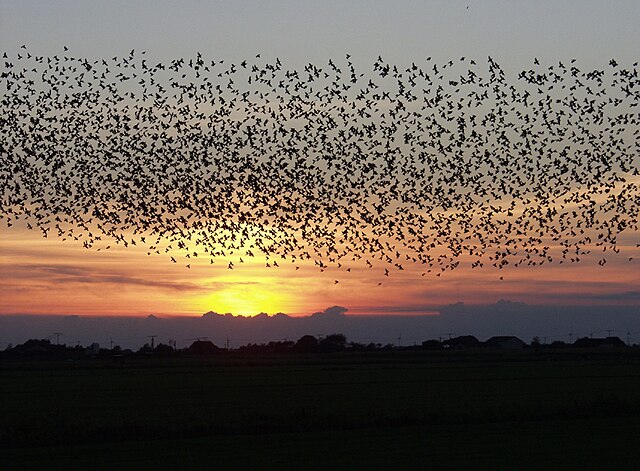
Sort sol. Starling flock at sunset in Denmark
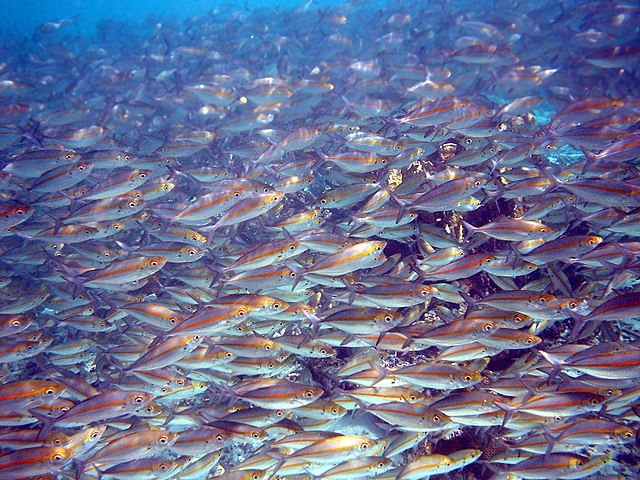
School of goldband fusiliers