Hermodike II
Videos
Hermodike II has been attributed with inventing coinage by Aristotle. Other historians have translated the name as Hermodice, Damodice or Demodike as translated by Julius Pollux.
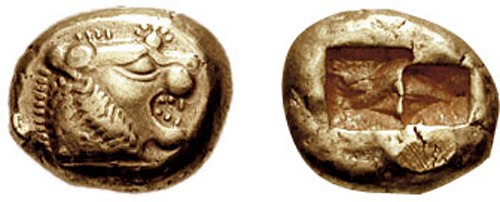
Early 6th-century BC Lydian electrum coin (one-third stater denomination)

Ionia, Uncertain city (possibly Kyme, Aeolis) 600–550 BCE, Hemiobol. Horse head, rough incuse
Cyme (Aeolis)
Videos
Cyme or Cumae was an Aeolian city in Aeolis close to the kingdom of Lydia. It was called Phriconian, perhaps from the mountain Phricion in Aeolis, near which the Aeolians had been settled before their
Hermodike II
…Other historians have translated the name as Hermodice, Damodice or Demodike as translated by Julius Pollux. Hermodike II was the daughter of a dynastic Agamemnon of Cyme and married to the third dynastic King Midas, possibly a literary reference to Alyattes of Lydia, in the 6th century BC. She was named after Hermodike…

Aeolis, Kyme; Tetradrachm; Silver; circa 165-140 BC; Obverse: Head of the Amazon Kyme right, wearing taenia; Reverse: Horse walking right, skyphos (one handled cup) below, ΚΥΜΑΙΩΝ left, ΣΕΥΘΗΣ (magistrate) in exergue, all within laurel-wreath; 34.2mm, 16.409g; Reference: SNG Von Aulock 1640; Oakley obv. die 59; Sg4183 var

Front: Cyme Ruins and Christian Cross, Back: Aliağa Port and Wind Mill

Nero & Diva Agrippina Jr Æ 15mm of Aeolis, Cyme. Circa 54-59 AD. QEON NERWNA KUMAIWN, young laureate head of Nero right / QEAN AGRIPPINAN, veiled head of Agrippina Jr right.

Statue of a young woman; late Hellenistic, 1st century BC, Cyme (Namurt).