Herta Bothe
Videos
Herta Bothe was a German concentration camp guard during World War II. She was imprisoned for war crimes after the defeat of Nazi Germany, and was subsequently released early from prison on 22 Decembe
Bothe awaiting trial in Celle (August 1945)


19 April 1945 Bergen-Belsen SS women camp guards are paraded for work in clearing the dead. The women include Hildegard Kanbach (first from left), Magdalene Kessel (second from left), Irene Haschke (centre, third from right), the Head Wardress, Herta Ehlert (second from right, partially hidden) and Herta Bothe (first from right). Herta Bothe (also known as Hertha Bothe) accompanied a death march of women from central Poland to Bergen-Belsen. She was sentenced to 10 years imprisonment and released early from prison on 22 December 1951.
Stutthof concentration camp
Videos
Stutthof was a Nazi concentration camp established by Nazi Germany in a secluded, marshy, and wooded area near the village of Stutthof 34 km east of the city of Danzig in the territory of the German-a

Prisoner barracks after liberation

Stutthof concentration camp administration

Stutthof prisoners eat during a break in the construction of the camp, October 1939.
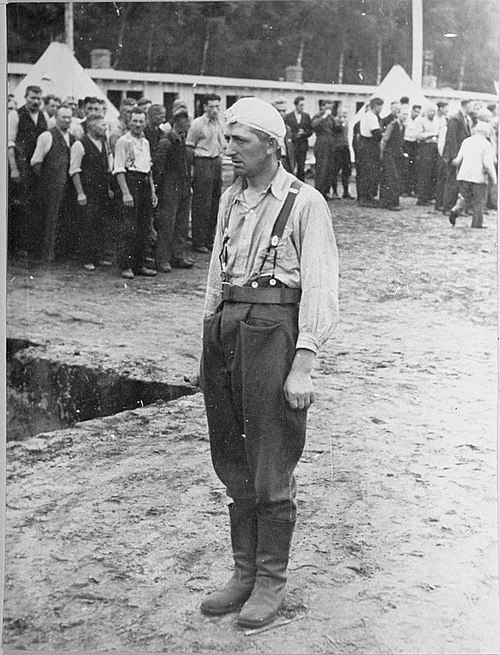
A Polish POW stands at attention in the Appellplatz at Stutthof, October 1939.