Hindi film music
Videos
Hindi film songs, more formally known as Hindi Geet or filmi songs and informally known as Bollywood music, are songs featured in Hindi films. Derived from the song-and-dance routines common in Indian films, Bollywood songs, along with dance, are a characteristic motif of Hindi cinema which gives it enduring popular appeal, cultural value and context. Hindi film songs form a predominant component of Indian pop music, and derive their inspiration from both classical and modern sources. Hindi film songs are now firmly embedded in North India's popular culture and routinely encountered in North India in marketplaces, shops, during bus and train journeys and numerous other situations. Though Hindi films routinely contain many songs and some dance routines, they are not musicals in the Western theatrical sense; the music-song-dance aspect is an integral feature of the genre akin to plot, dialogue and other parameters.

A group of Bollywood at the Indian Singers' Rights Association (ISRA) meet in 2013. Standing (L to R) Kailash Kher, Sonu Nigam, Sowmya Raoh, Javed Ali, Shaan, Udit Narayan, Manhar Udhas, Kunal Ganjawala, Abhijeet Bhattacharya, Hariharan, Mahalaxmi Iyer, Sitting (L to R) Mohammed Aziz, Pankaj Udhas, Alka Yagnik, Sanjay Tandon, Chitra Singh, Suresh Wadkar, Mitali Singh.
Pakistani popular music
Videos
Pakistani popular music or shortly Pakistani pop music refers to popular music forms in Pakistan. Pakistani pop is a mixture of traditional Pakistani classical music and western influences of jazz, rock and roll, hip hop and disco sung in various languages of Pakistan, including Urdu. The popularity of music is based on the individual sales of a single, viewership of its music video or the singer's album chart positions. Apart from within Pakistan, Pakistani pop music has also achieved an influential following and popularity in neighboring countries and is listened by members of the Pakistani diaspora, especially in the Middle East, Europe and North America.
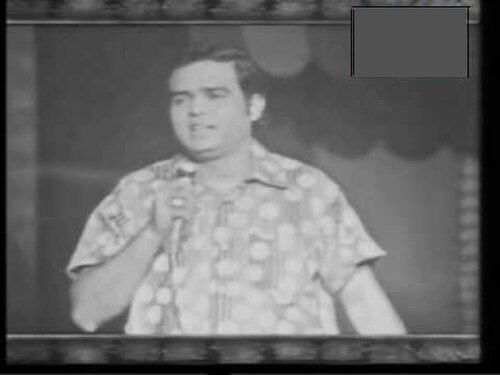
Rushdi during a live performance

In the 1990s, the Strings gained a lot of publicity for their rock/pop music genre.

Atif Aslam