History of Greece
Videos
The history of Greece encompasses the history of the territory of the modern nation-state of Greece as well as that of the Greek people and the areas they inhabited and ruled historically. The scope o

The ancient theatre of Dodona

The Temple of Hephaestus in Athens

Bust of Herodotus in Stoa of Attalus, one of the earliest nameable historians whose work survives.

Leonidas at Thermopylae by Jacques-Louis David.
Aegina
Videos
Aegina is one of the Saronic Islands of Greece in the Saronic Gulf, 27 km from Athens. Tradition derives the name from Aegina, the mother of the mythological hero Aeacus, who was born on the island an

View of Aegina's seafront

A panorama of the island of Aegina, from the Mediterranean sea.

Silver stater of Aegina, 550–530 BC. Obv. Sea turtle with large pellets down centre. Rev. incuse square punch with eight sections.
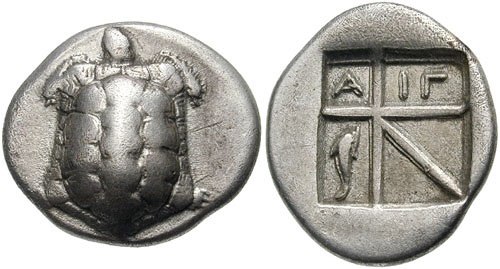
Silver drachma of Aegina, 404–340 BC. Obverse: Land tortoise. Reverse: inscription ΑΙΓ(INA) "Aegina" and dolphin.