History of Maine
Videos
The history of the area comprising the U.S. state of Maine spans thousands of years, measured from the earliest human settlement, or approximately two hundred, measured from the advent of U.S. statehood in 1820. The present article will concentrate on the period of European contact and after.


Marker commemorating the Dutch conquest of Acadia (1674), which they renamed New Holland. This is the spot where Jurriaen Aernoutsz buried a bottle at the capital of Acadia, Fort Pentagouet, Castine, Maine
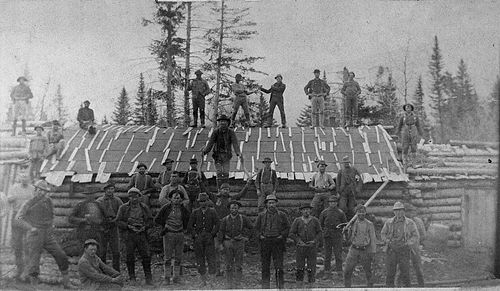
Loggers at Russell Camp, Aroostook County, ca. 1900

Union private Daniel A. Bean of Brownfield, Maine, 11th Maine Volunteer Infantry Regiment by John Wilson (sculptor)
Webster–Ashburton Treaty
Videos
The Webster–Ashburton Treaty, signed August 9, 1842, was a treaty that resolved several border issues between the United States and the British North American colonies. Signed under John Tyler's presidency, it resolved the so-called Aroostook War. The provisions of the treaty included:The settlement of the location of the Maine–New Brunswick border, which was the primary cause of the Aroostook War.
Establishment of the border between Lake Superior and the Lake of the Woods, originally defined in the Treaty of Paris in 1783;
Reaffirmation of the location of the border in the westward frontier up to the Rocky Mountains defined in the Treaty of 1818;
Definition of seven crimes subject to extradition;
Agreement that the two parties would share use of the Great Lakes;
Agreement that there should be a final end to the slave trade on the high seas.


Plaque in Washington, D.C.

Maine boundary dispute that led to the 1842 Webster–Ashburton Treaty