History of North Carolina
Videos
The history of North Carolina from pre-colonial history to the present, covers the experiences of the people who have lived within the territory that now comprises the U.S. state of North Carolina.

Artists conception of Town Creek Indian Mound during the late Town Creek-early Leak phases circa 1350 CE
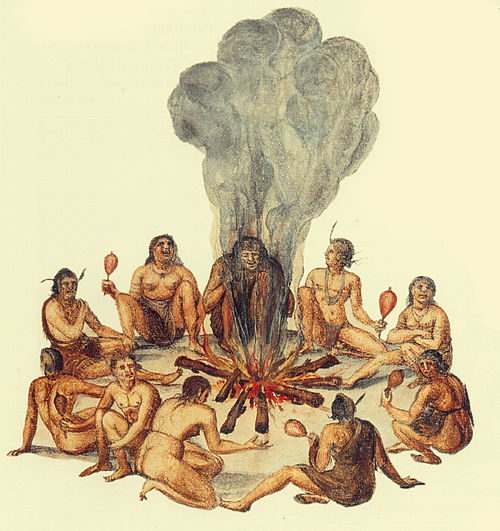
Ceremony of Secotan warriors in North Carolina. Watercolour by English colonist John White, 1585

Sir Walter Raleigh, sponsor of the Roanoke Colony, and namesake of the capital city of North Carolina, Raleigh

North Carolina is named after King Charles I of England. Carolina is taken from the Latin word for "Charles", Carolus.
Roanoke Island
Videos
Roanoke Island is an island in Dare County, bordered by the Outer Banks of North Carolina. It was named after the historical Roanoke, a Carolina Algonquian people who inhabited the area in the 16th century at the time of English colonization.

Watercolor by Englishman John White of the natives of the Roanoke Peoples.

The discovery of Croatoan by Sir Walter Raleigh's Expedition, as painted by John White. Croatan is a nearby island on the Outer Banks, but it could not be investigated due to an approaching hurricane.

Wood Engraving of early settlers arriving in coastal North Carolina from 1713.

The soldier in our Civil War - a pictorial history of the conflict, 1861–1865, illustrating the valor of the soldier as displayed on the battle-field, from sketches drawn by Forbes, Waud, Taylor, (14576444137)