History of Puerto Rico
Videos
The history of Puerto Rico began with the settlement of the Ortoiroid people before 430 BC. At the time of Christopher Columbus's arrival in the New World in 1493, the dominant indigenous culture was

Taíno village at Tibes Indigenous Ceremonial Center in Ponce, Puerto Rico.

Christopher Columbus, the explorer credited with the European discovery of Puerto Rico.

Juan Ponce de León (Santervás de Campos, Valladolid, Spain), was the first governor of Puerto Rico. His grandson Juan Ponce de Leon II was the first indigenous governor of Puerto Rico.
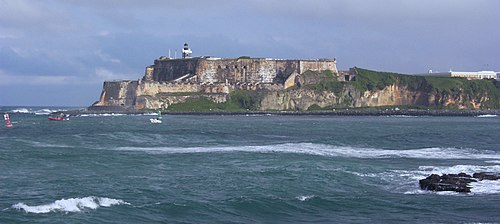
View across the Bay of San Juan of Fort San Felipe del Morro
Sovereigntism (Puerto Rico)
Videos
The free association movement in Puerto Rico refers to initiatives throughout the history of Puerto Rico aimed at changing the current political status of Puerto Rico to that of a sovereign freely ass

The logo used by the PPD members affiliated to the free association movement

Román Baldorioty de Castro

Rafael Cordero Santiago's grave

Aníbal Acevedo Vilá